
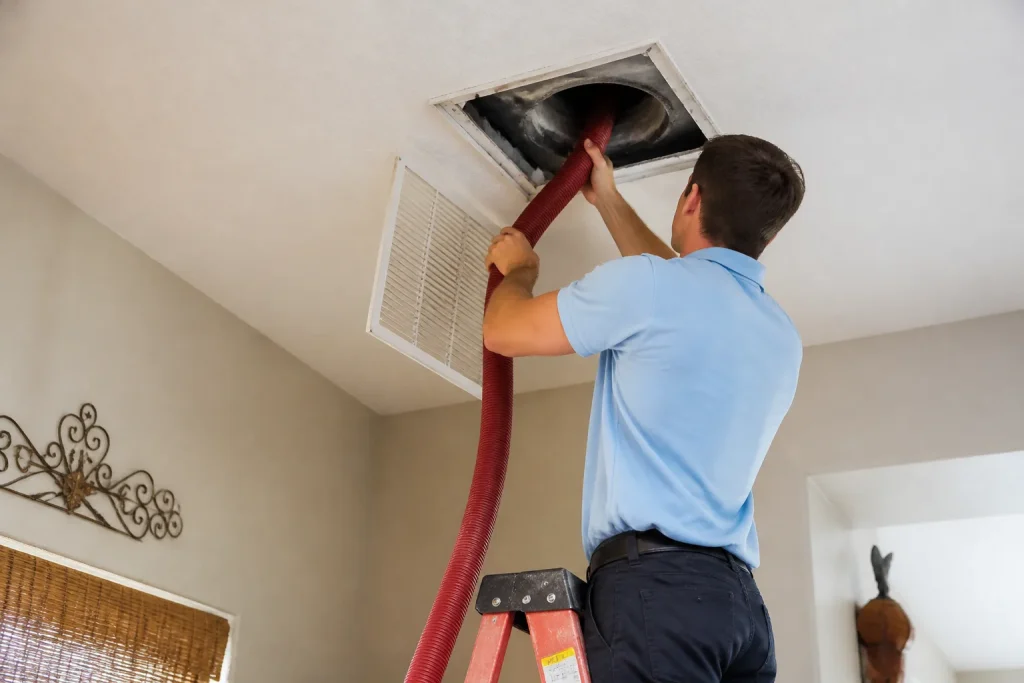
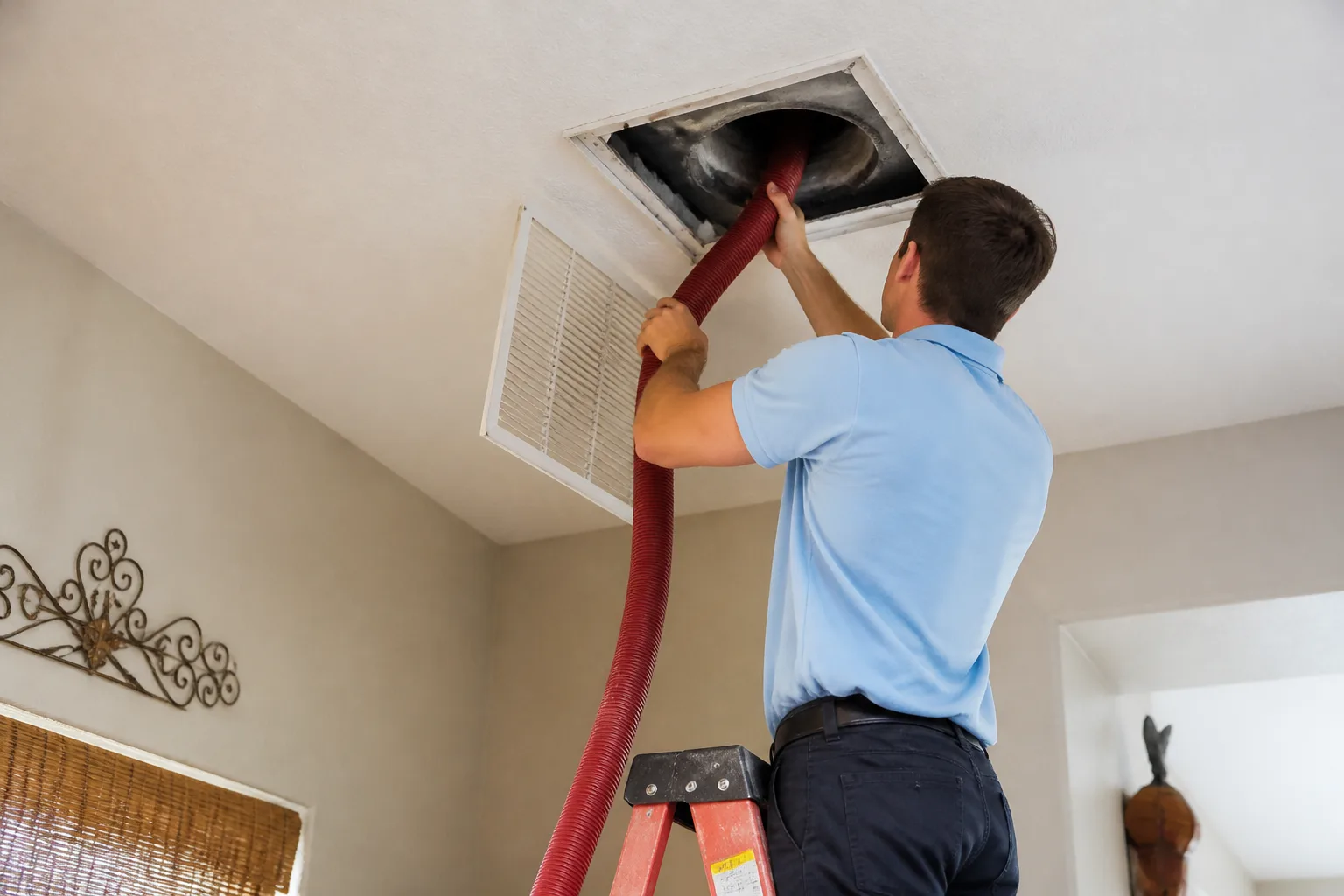
Emergency Air Duct Cleaning Near Me: What Aliso Viejo Homeowners Should Do First
The most expensive mistake in an air duct emergency happens before anyone arrives: turning the HVAC back on to “see if it clears out.” A fan running in ‘fan only’ mode pulls contaminated air from a rodent drop, smoke residue or damp ductwork and spreads it into every room the supply registers feed. Shut the system down first, then triage the problem. If you’d rather not sort through it alone, call (877) 820-9657. We answer 24/7, with fast dispatch from 7am to 7pm.
Step One: Turn the System Off, Not to Fan Only
After a rodent intrusion, a smoke event or a sudden discovery of mold, the first move is to stop the air handler. Not switch it to fan only. Not bump the thermostat down a few degrees while you decide. Off.
Here’s why homeowners get this wrong. ‘Fan only’ mode looks harmless. It runs the blower with no heating or cooling, so it feels like a gentle airing-out. In practice, it does the opposite of what you want. Your return ductwork is pulling air from the same rooms where the contamination started, and the supply side is distributing it through every register in the house. A single hour on fan only can move pest debris, fine ash or mold spores into bedrooms the problem hadn’t reached yet. In our experience, Aliso Viejo homes with zoned ductwork can spread contamination to upper-floor rooms that way in minutes, not hours.
Do this in order:
- Switch the thermostat to OFF, not Heat, Cool or Fan.
- Close the air handler’s power switch if there is one at the unit, or flip the breaker labeled for the air handler.
- Close supply registers and return grilles in the affected rooms if they have dampers or a closable grille.
- Keep children, pets and anyone with allergies out of the affected rooms until you’ve spoken to a technician.
- Don’t spray cleaners, air fresheners or sanitizers into the ducts. A homeowner-grade spray can wet the dust and residue into a sticky film that’s harder to remove, and it may muddy visual evidence you’ll want for documentation.
Leave the system off until someone qualified has looked at the ductwork. Turning it back on to test whether it smells better is how small problems become whole-house ones.
Step Two: Categorize the Emergency Before You Call
Not every air duct emergency is the same, and a good technician will bring different equipment for different problems. Knowing which of these four you’re dealing with helps you get the right response on the first visit.
Smoke and fire residue
Wildfire smoke events and interior smoke share a problem: fine, oily particles that settle inside ductwork and stick to the blower wheel and coil. This isn’t dust. Standard vacuuming smears it. A specialist should be arriving with HEPA-rated negative-air equipment and a sanitizing step. That’s why we stock Abatement Technologies equipment, which is built for contamination control you can verify, not just a visual pass.
Rodent or pest intrusion
Mice and rats leave droppings, nesting material, urine and fine dander inside ducts and flex runs. This is a health-safety situation, so the response is less about cleaning and more about removal, disinfection and then checking for the gaps where they got in. Clean ducts are only half the job. Sealed ducts are the other half. If your pest issue involves a gap in a duct run or a damaged flex section, see our Aliso Viejo Air Duct Cleaning Pros page on repairs before you book.
Water intrusion and mold
Whether it came from a roof leak, a condensate line overflow, a washing machine line or a slow drip behind the air handler, any moisture inside ductwork is a mold risk within a few days. If you can see discoloration or smell the damp, musty odor of active growth, don’t run the system.
Sudden severe allergy flare
Sometimes there’s no visible event at all. Just a sharp jump in symptoms, sneezing or breathing irritation at home, and a nagging feeling the ducts are involved. That’s a legitimate reason to call and get the system assessed. A duct cleaning for a household of allergy-sensitive people is worth doing correctly. For that, plain duct cleaning is usually enough. See our page on air duct cleaning for what a standard whole-system job involves.
Step Three: Have These Four Details Ready When You Call
The single biggest difference between a fast, right-first-time visit and a return trip is how well the dispatcher knows what the technician is walking into. Have these four answers ready:
- Home size and rough layout. Square footage and where the affected rooms are. Aliso Viejo has a lot of two-story and split-level homes with long duct runs. Knowing whether the contamination is upstairs, downstairs or both changes the setup.
- HVAC system age and type. How old the furnace or air handler is, and whether it’s a conventional split system or a heat pump. Older systems often have more rigid ductwork and easier access points.
- Contamination type. Smoke, rodent, water/mold, or just allergy-triggered. Be specific. “It smells weird” is a starting point, but “we found droppings in a return grille after a mouse issue” gets a completely different response.
- Duct material. Rigid metal, flex duct, ductboard, or a mix. This determines which equipment and brush method a technician brings.
If you know the answer to a fifth question, even better: where is the return air grille and the air handler located? It saves a walk-around at the start. A dedicated HVAC cleaning visit often runs into the same access questions, so having these details saves time either way.
Step Four: Document Everything Before Cleaning Starts
If your situation is tied to a fire, a wildfire smoke event, a water loss or a pest problem, document it before anyone cleans. Once the ducts are clean, the evidence is gone, and insurance claims hinge on evidence.
- Photograph the affected rooms, registers, condensation lines and any visible droppings, soot or staining. Pull the register grille off for a clear shot if it’s safe to do so.
- Photograph the thermostat reading and the air handler label showing system age.
- Note the date and approximate time the problem started or was discovered.
- Keep any repair estimates or pest-control invoices related to the event.
- Ask your insurer what documentation they want before you book the cleaning, not after.
This matters especially in Aliso Viejo, where many townhomes and condos fall under an HOA that may cover or share responsibility for HVAC components in common walls or shared chases. Confirm with your HOA before cleaning begins. Don’t assume the HOA will cover a duct repair after the fact. Get the scope of responsibility in writing. If the claim is for wildfire smoke from a regional event, insurers may want proof the cleaning was performed for contamination reasons, not routine maintenance. A pre-cleaning inspection report from the technician, paired with your own photos, is far stronger than a verbal description later.
Step Five: Know What “Same-Day Emergency” Actually Looks Like
Honest expectations help more than a promise. Same-day service is available in most cases when you call early enough. What that visit involves depends on the category:
- Smoke or rodent: An inspection and containment setup are realistic on day one. Full cleaning may follow on the same visit or be scheduled based on system size and the number of duct runs.
- Water intrusion and mold: The first visit should address the moisture source and assess the extent of contamination. Cleaning can’t proceed safely until the moisture is resolved.
- Allergy flare: This is a scheduled duct cleaning, not typically a same-day emergency, unless the symptoms are severe.
What doesn’t happen same-day, and shouldn’t: a technician showing up without the right equipment because the dispatch call didn’t include the four details. Our technicians have up to 15 years of experience, and the reason professional-grade Rotobrush and Nikro equipment is on every job is that shop-vacs and consumer-grade vacuums simply can’t move the volume of air needed to clean a whole system correctly. A technician who arrives prepared will confirm the scope before work begins, show you the equipment and explain the process. Which is where our promise lives: one flat price per system, agreed before work starts. No per-vent pricing surprises. And you get before-and-after photos of your own ducts, so you can verify what was done.
When to Call a Pro Instead of Handling It Yourself
Any contamination event involving rodent droppings, visible mold, or smoke residue from a fire should be handled by a specialist. The health risk of disturbing contaminated dust without containment is real, and the equipment needed is well beyond what a homeowner can buy or rent. Dryer vent cleaning belongs on that list too. Lint buildup behind the dryer is a fire risk that no vacuum hose reaches properly. Our dryer vent cleaning page explains why.
For whole-home air quality, we work with Honeywell and Aprilaire filtration products. When a duct system keeps pulling in the same contaminants, filtration upgrades reduce the load between cleanings.
The Bottom Line
Emergency air duct problems in Aliso Viejo come down to a simple order of operations: turn the system off, categorize the contamination, call with the four details ready, document everything, then clean and repair the root cause. Running the fan to “see if it clears” is the one move that makes everything worse. If you’re in Aliso Viejo and need help, Aliso Viejo Air Duct Cleaning Pros offers free estimates. Call (877) 820-9657. We answer 24/7. Fast dispatch from 7am to 7pm, Sunday through Friday. The written estimate sets the final price, and with that one call you’ve covered the whole air system: cleaning, dryer vent, duct repair and air quality saniting.
Frequently Asked Questions
No. Fan only mode pulls contaminated air from the affected rooms and spreads it through every supply register in the house. Keep the system off until a technician assesses the ductwork. Call (877) 820-9657 for guidance over the phone.
It depends on home size, duct material and contamination type, so there’s no flat per-vent figure that would be honest for every case. We give a flat price per system after the inspection, and that written estimate sets the final price. Estimates are free. Call (877) 820-9657 for an exact quote.
Not automatically. Whether you do depends on whether smoke residue actually reached the ducts and on how sensitive the household is. A short inspection visit can tell you whether cleaning is warranted. Call (877) 820-9657 to book one.
Usually because the equipment and process are cheaper. A short visit with a shop-vac and a wire brush does not remove contamination the way a controlled HEPA setup does. Ask what equipment will be used and whether before-and-after photos are included. Call (877) 820-9657 and we’ll walk you through what a proper job includes.
Written by the team at Aliso Viejo Air Duct Cleaning Pros.
Need Air Duct Cleaning Help?
Call Aliso Viejo Air Duct Cleaning Pros - the local pro we connect you with is licensed and insured, here with fast help in Aliso Viejo.
(877) 820-9657