
Last updated November 23, 2026
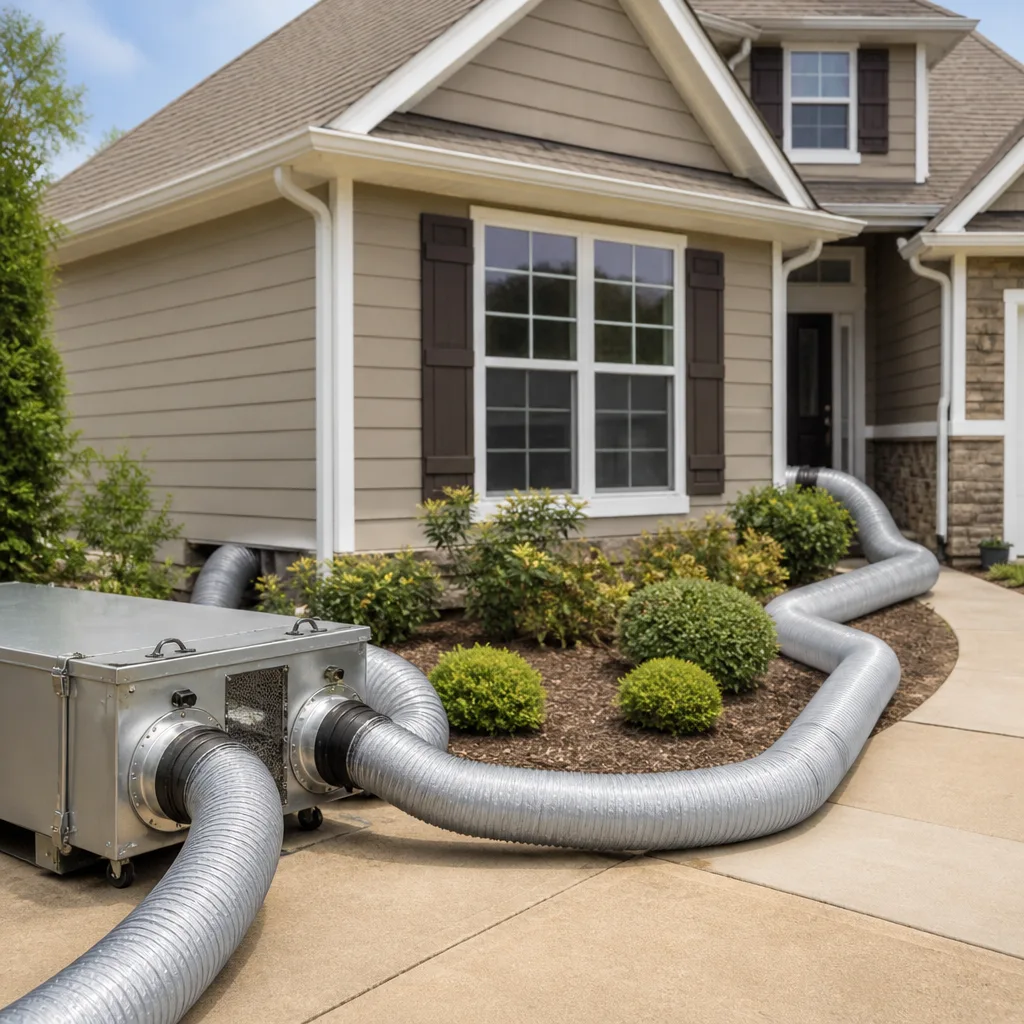 Whole-home duct cleaning
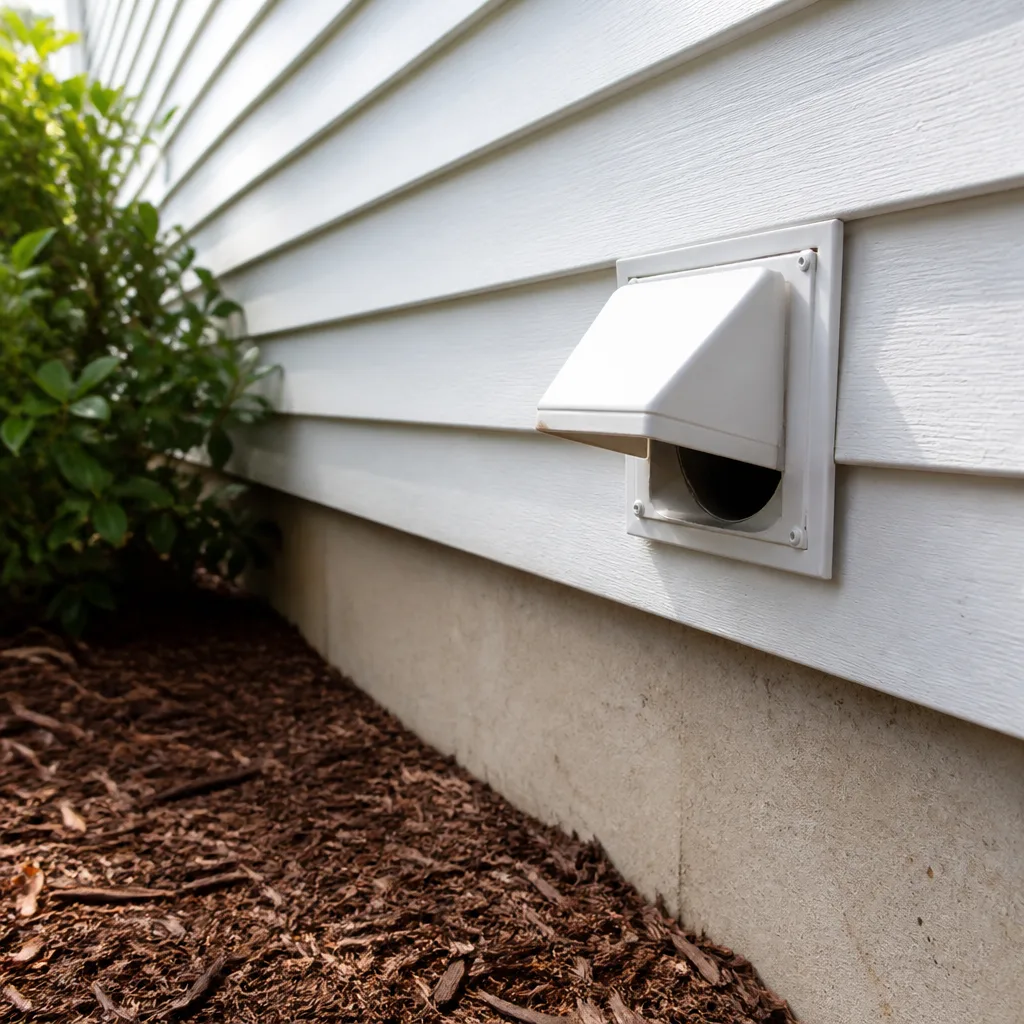 Dryer vent cleaning
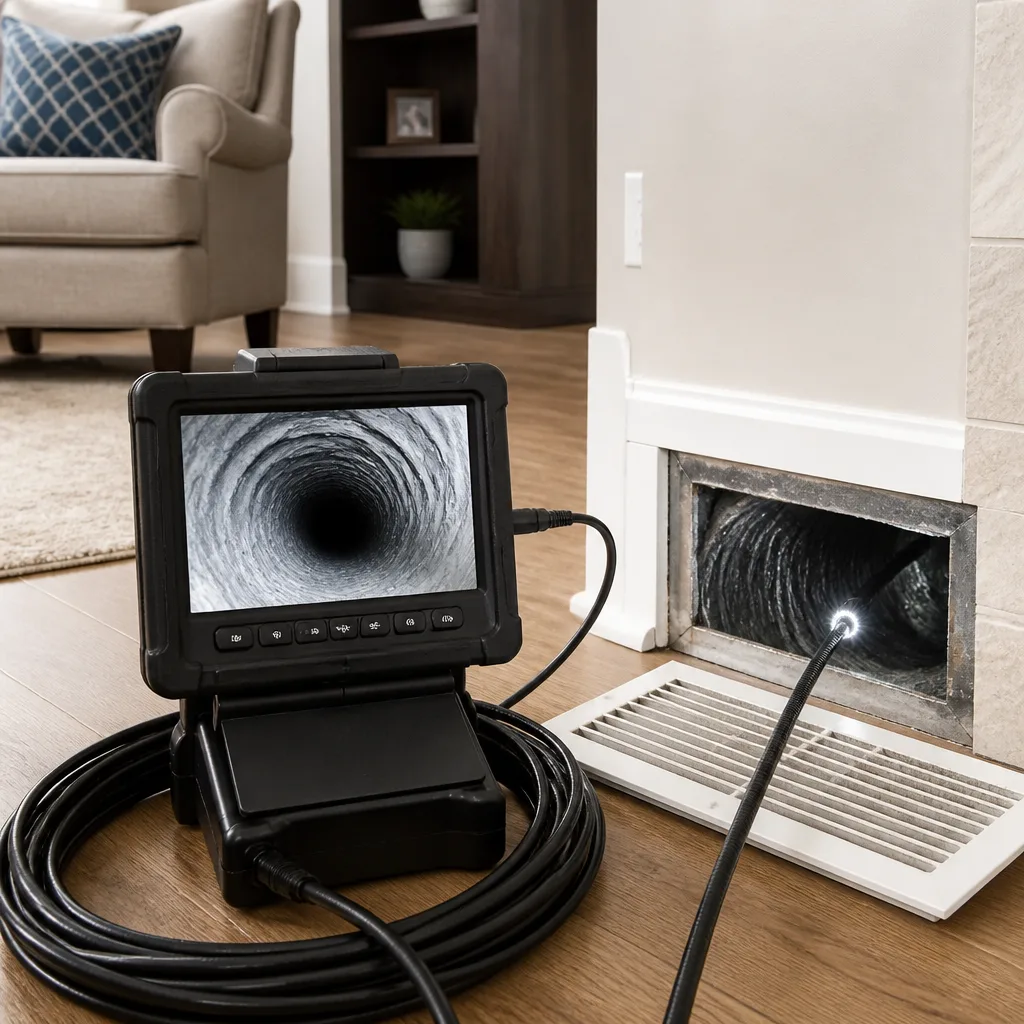 Camera inspection
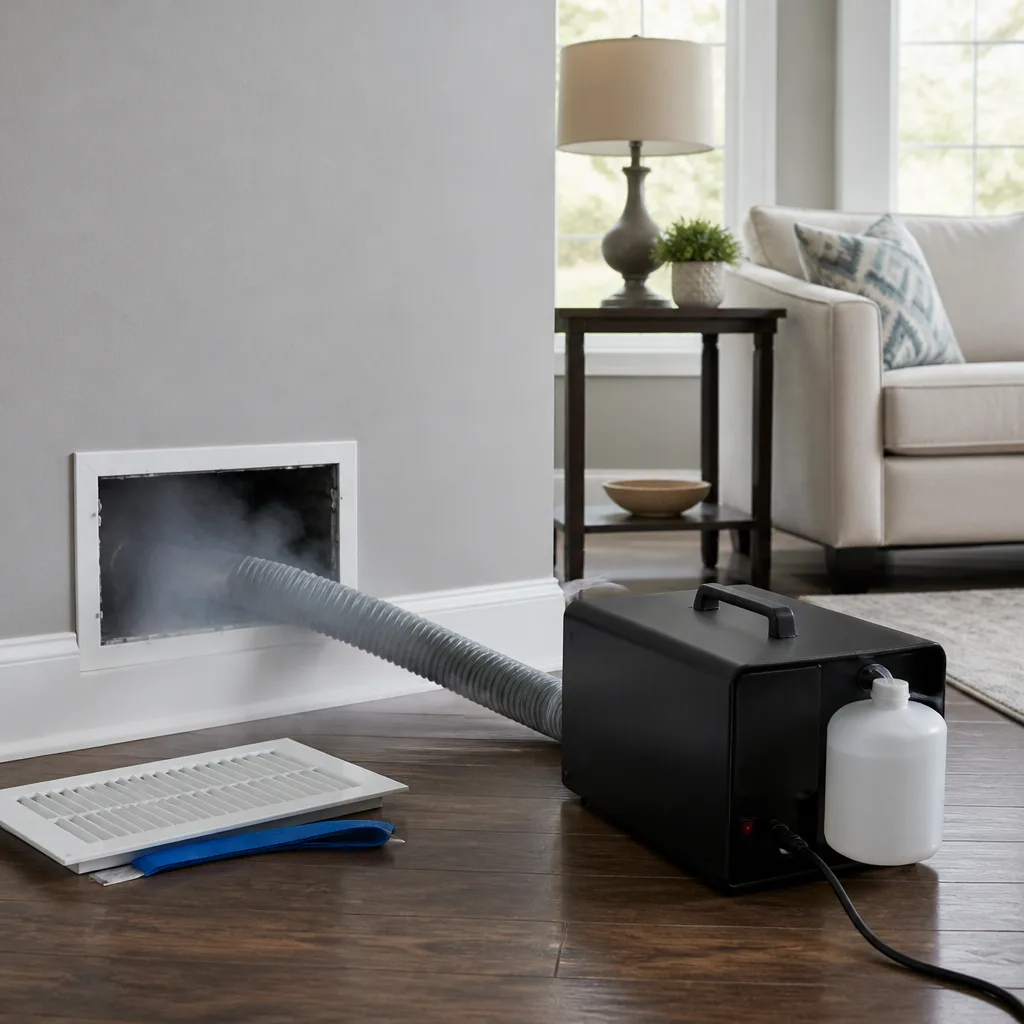 Sanitizing & deodorizing
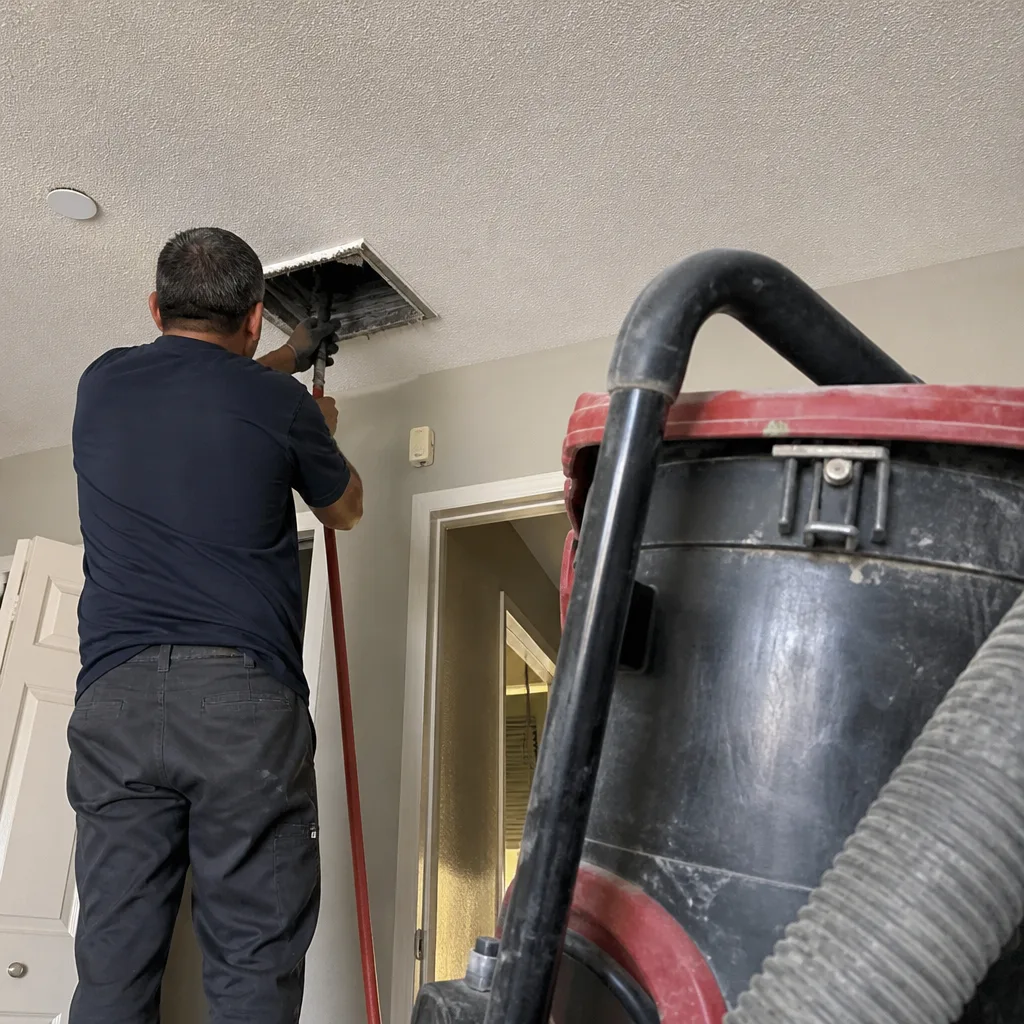
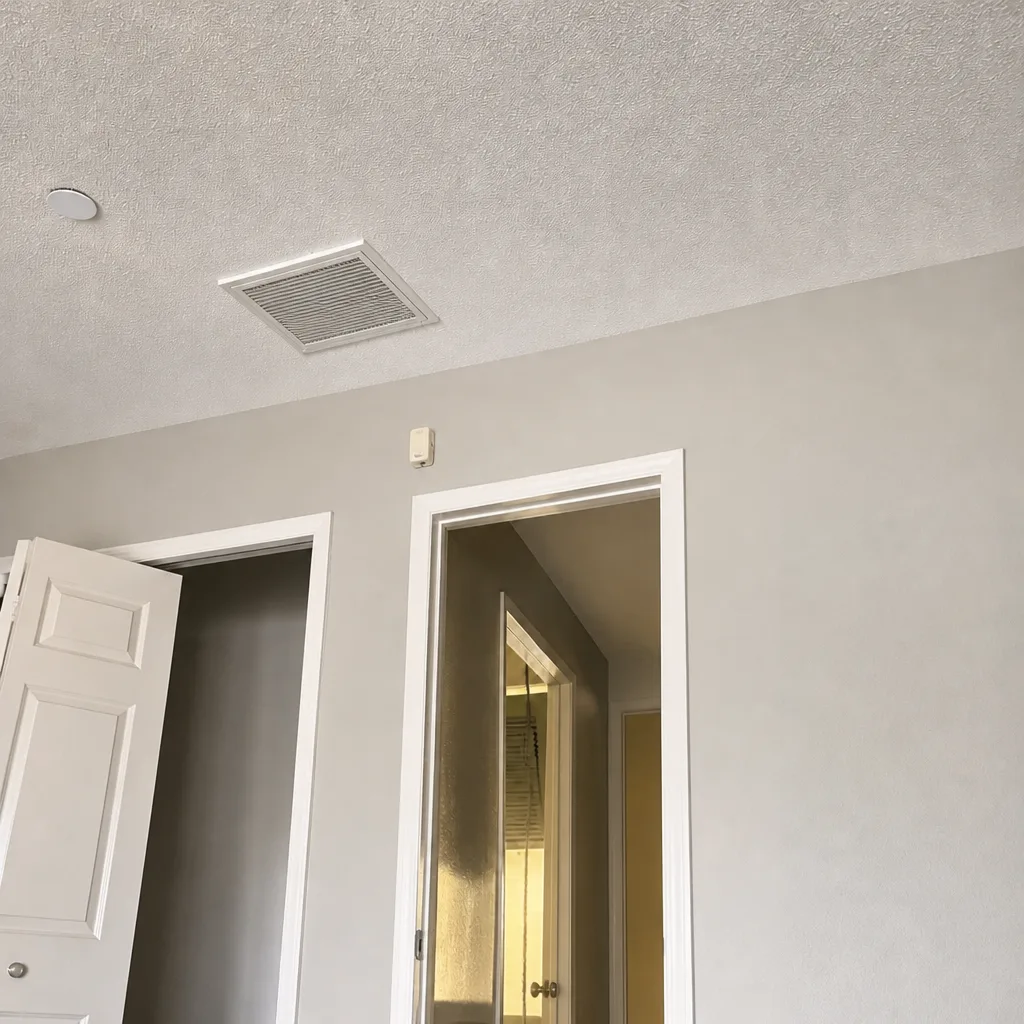
Whole-system duct and dryer vent check with before-and-after photos - you see exactly what came out of your vents
That "$99 whole-house special" is a bait ad - the real number appears once they are in your hallway, or the "clean" is a shop-vac at the register. We photograph the inside of your ducts before and after instead.
Air Duct Cleaning Emergency Preparedness Guide for Aliso Viejo Homes
Most Aliso Viejo households have an evacuation plan: a go-bag, a meet-up spot, a list of what to grab. Almost none have a plan for the HVAC system. That’s the gap this guide closes. During the 2020 wildfire season, smoke pulled through HVAC systems pushed indoor PM2.5 levels in some South Orange County homes higher than the air outside, because the system kept running normally and drew contaminated air straight into the duct network. Nothing about that is a cleaning problem alone. It’s a before, during, and after problem, and it plays out over months. We’ll walk through the pre-event protocol, what smoke particles actually do inside your ducts, how to triage a system after a smoke event, and when to clean versus when to wait. Everything here is written for Aliso Viejo homes and the wildfire corridor they sit in.
Quick Answer
If wildfire smoke reaches Aliso Viejo, shut off your HVAC system or switch it to recirculation mode if your thermostat supports it, then keep windows and doors closed. After the smoke clears, have the system inspected within a few weeks: smoke particles embed in flex duct liner and settle in the air handler, and standard cleaning may not fully remove them. Professional HEPA-filtered extraction, air sampling, and odor testing are what separate a real remediation from a surface wipe-down.
Styles & brands we work with
- Whole-home duct cleaning
- Dryer vent cleaning
- Camera inspection
- Sanitizing & deodorizing
Table of Contents
- Why wildfire smoke hits Aliso Viejo duct systems harder than people expect
- Pre-event protocol: what to do before smoke arrives
- What smoke particulates actually do inside a duct system
- Post-event triage: assessing what the system went through
- Temporary smoke odor vs. embedded contamination
- The emergency response timeline: clean now or wait
- Protecting the system between smoke events
- Common mistakes to avoid
Why Wildfire Smoke Hits Aliso Viejo Duct Systems Harder Than People Expect
Aliso Viejo sits inside a designated wildfire risk corridor. That’s the fact that makes this a different conversation than it would be in a coastal or inland city with no brushland nearby. When a fire burns within a reasonable distance, the smoke doesn’t stop at the city limits. It travels, it settles, and inside a home running its HVAC system normally, it gets pulled through the return, filtered once, and delivered to every room in the house. A standard filter catches a fraction of what the fire sends. The rest keeps moving.
Most Aliso Viejo homes are served by flexible duct systems in attics and interior chases. Flex duct is efficient and quiet, but it has a lined interior with ridges, and those ridges are exactly where fine particles collect. A wildfire event doesn’t just pass through. It deposits. You get fine ash, char fragments, and sub-micron smoke particles sitting in the same channel that will carry every cubic foot of conditioned air for the next decade.
Here’s the part that surprises people. Cleaning the ducts with a shop-vac or a consumer-grade vacuum attached to a register can make the problem worse, because it agitates settled particulate without filtering the exhaust. Professional-grade equipment, not shop-vac shortcuts, is what makes this remediation credible. Rotobrush and Nikro systems use aggressive agitation paired with HEPA-filtered negative-air containment, so particles leave the duct and enter the machine, not the room. That’s not a sales detail. It’s the difference between a clean duct and a dispersed one.
If your system ran through a smoke event in Aliso Viejo, the first step is a proper assessment. That means air duct cleaning by a team trained on post-smoke protocol, not a standard maintenance cleaning. The two are not the same job.
Pre-Event Protocol: What to Do Before Smoke Arrives
Wildfire smoke events in Aliso Viejo are forecast. That means you have warning. The pre-event protocol is a short checklist and it takes minutes to set up on your thermostat, so you’re not fumbling with it while the sky turns orange.
- Check whether your thermostat has a fan-only or recirculation mode. Many modern thermostats, including the Honeywell and Aprilaire thermostats we’re familiar with, allow you to run the indoor fan without drawing outside air on systems that support it. If your system is configured for recirculation, this keeps air circulating through the filter while keeping the outdoor intake closed.
- Know how to shut the system down completely. Find the thermostat, and find the service disconnect at the air handler if you don’t already know where it is. In a heavy smoke event, shutting off the system is often the safer move than running it, especially if your filter is old.
- Replace your filter before the event if it’s due. A filter at capacity offers almost no protection. A fresh filter before a smoke event catches more of the fine particulate than one that’s been running for a year.
- Seal gaps you can reach. Weatherstripping around doors, sealant around window frames, and a quick pass over the garage-to-house door. Every gap that lets smoke in is a gap you’ll be fighting for the next four weeks.
- Plan the indoor air strategy. Close windows before the smoke arrives, not after. Set a dedicated clean room if you have a family member with asthma or allergies, and run a portable HEPA unit in that room if you have one.
- Write down what you did. Sounds trivial, and it isn’t. After a smoke event, knowing whether your system was running, which mode it was in, and how long it ran is the single most useful thing a technician can know when assessing the ducts.
Homeowners in Aliso Viejo who plan for smoke the way they plan for evacuation end up in a much better position by the time the air clears. The system that runs during the event is the system that needs remediation after it.
What Smoke Particulates Actually Do Inside a Duct System
Not all duct materials behave the same way when smoke passes through them. That’s what most generic cleaning pages miss. The duct material determines whether contaminants sit on the surface and leave clean, or whether they embed and require more aggressive extraction.
Flex duct liner: the harder problem
Flexible duct has an inner liner, often a thin polymer sleeve over a wire helix. The ridges between the coils create pockets. Smoke particles in the PM2.5 range (2.5 microns and smaller, small enough to travel deep into lung tissue) drift into those pockets and cling, because the liner material holds a static charge and the particles are tiny enough to sit in the micro-texture. Char fragments from a wildfire are larger and settle near the boot and register, but the fine fraction spreads throughout. Surface cleaning removes what’s on top. It does not lift what’s in the ridges of the liner. That’s why standard cleaning may not fully remediate a smoke-exposed flex system.
Sheet metal: easier, but not invisible
Sheet metal duct has a smooth interior. Smoke leaves a visible film on the surface and in the seams. A technician can see it, scrub it, and verify it’s gone. The challenge with metal is the seams and the connections at plenum junctions, where contamination tends to collect. If those junctions are also leaking (and many older Aliso Viejo systems have leaky junctions), the contamination is escaping into the attic and into the home through paths the ducts don’t control.
The air handler is the other half of the story
The blower wheel, the evaporator coil, and the interior of the air handler cabinet collect smoke residue like a sponge. A duct cleaning that skips the air handler leaves the worst of the contamination behind. That’s why the work has to include the HVAC side, which is why our HVAC cleaning covers the air handler, blower, and coil as part of the same job.
We use Abatement Technologies air-quality protocols on post-smoke jobs because they let us verify results rather than guess. Sampling and measured contamination control matter when the question is “is my family breathing this?”
Post-Event Triage: Assessing What the System Went Through
Once the smoke has cleared and air quality outside is back to normal, the next step is determining what your system experienced. This is triage, not cleaning. You want to know three things: was the system running during the event, at what mode, and for how long. That answer drives the entire remediation plan.
Start with what you know
- Did the thermostat show the fan running? If yes, contaminated air was pulled through at whatever rate your blower runs. Longer runtime means more deposit.
- Was the system in cooling or heating mode? Cooling pulls air through the evaporator coil, which is a filter of last resort and collects everything. Heating pulls through the same filter, but the blower runs at a different speed.
- What was your filter’s condition? A fresh filter before the event caught more. A loaded filter caught almost nothing and the smoke went around the edges.
- Did you smell smoke indoors? If you could smell it inside during the event, the system almost certainly carried it.
What a post-smoke inspection should include
- Visual scope of the return and supply trunk. A technician should look into the trunk lines and the air handler cabinet. Visible char, dark staining, or grey film on metal is evidence of smoke passage.
- Air sampling. Abatement Technologies sampling identifies particle loading and contamination in the airstream. It’s the difference between “the ducts look okay” and “we have measured what’s in them.”
- Odor testing. Smoke odor that persists when the system is running is an indication of contamination, not just residual smell.
- Filter condition and filter bypass. A filter that’s muddy, dark, or caked signals heavy loading. Bypass around the filter (air going around rather than through) is common and should be corrected before a new filter is expected to work.
- Duct joint and seam integrity. Leaky joints mean smoke entered paths you didn’t see and smoke can leave paths you didn’t guess.
- Air handler coil and blower inspection. This is where a lot of the residue ends up and where skimping on the scope shows up months later.
If the inspection turns up more than surface contamination, the remediation work is a professional extraction job with HEPA containment. Not a vacuum rental, and not a filter swap with a candle to cover the smell. We work with homeowners across Aliso Viejo on exactly this assessment, and the honest answer is that a proper inspection sometimes says “the ducts are fine, clean the air handler and filter.” That’s a useful answer too.
Temporary Smoke Odor vs. Embedded Contamination
Smoke odor behaves differently depending on where the contamination sits. A faint smoky smell in the first few days after an event is usually volatile compounds that off-gas from carpet and soft furniture. It fades as you ventilate. Embedded contamination doesn’t fade. It returns when the system runs, when humidity rises, and when the weather warms. Aliso Viejo’s typical weather pattern (cooler mornings, warmer afternoons) creates daily expansion and contraction in the home that pushes trapped odor out of the ducts and into the room a little at a time.
Here’s how to tell the difference:
- Odor that follows the HVAC cycle. If the smell strengthens when the fan runs and fades when it stops, the source is in the airstream, not the carpet.
- Odor that persists after cleaning the room. Vacuuming carpet, wiping furniture, and ventilating with fresh air should reduce surface odor. If it doesn’t, the source is deeper.
- Visible staining on registers. A dark film on the register face, the blades, or the grille is a visible deposit that suggests the same is happening a few feet upstream.
- Odor that comes back with a weather change. If the smell returns each time the temperature shifts or the system cycles, that’s embedded contamination, not residual volatile compounds.
Embedded contamination requires full HEPA-filtered negative-air extraction and disinfecting, not masking. That’s where sanitizing using Abatement Technologies protocols and Guardsman-grade protection products comes in. The job is not only to remove the contaminant but to treat the surfaces so the next event doesn’t deposit on a contaminated foundation. If you smell smoke in the house when the system runs, call (877) 820-9657. We answer 24/7, and a call outside dispatch hours is booked into the next opening, Sunday through Friday, 7am to 7pm.
The Emergency Response Timeline: Clean Now or Wait
The instinct after a smoke event is to clean immediately. Sometimes that’s right. Sometimes it isn’t. Here’s the timeline we use to guide homeowners in Aliso Viejo through the decision.
Phase 1: During the event (0 to 3 days)
Shut off the system or switch to recirculation. Keep windows closed. Do not run the system to “clear the air,” because there is no clean air to pull in. If you have a portable HEPA purifier, run it in the room where family spends the most time. Do not start a cleaning job during this phase; there’s no way to verify the work when the outdoor air is still contaminated.
Phase 2: Immediately after (first 72 hours to 2 weeks)
Once the fire is contained and outdoor air quality is back to normal, it’s time for the inspection. Not always cleaning, but inspection. A technician can measure what got in. This is also the window to replace the HVAC filter and clear debris from return grilles. If the system was running heavily during the event, this is when remediation should be scheduled.
Phase 3: The 2 to 4 week window (but not longer)
Fine particulate keeps settling for a few weeks after the smoke clears. Some homeowners benefit from waiting 2 to 4 weeks so that most of the settled material is available for extraction in a single thorough visit. Waiting doesn’t hurt if the system is off or running on recirculation with a fresh filter. Waiting longer than a month allows particles to embed more deeply into the flex duct liner and become harder to lift, which makes the cleaning less effective. Two to four weeks is a practical middle ground.
Phase 4: Months later (if you haven’t cleaned)
If the smoke event was months ago and you’re still smelling it, the window for a standard cleaning has closed. This is now a remediation job with full HEPA extraction, an air handler scope, and possibly some duct repair. That’s why we treat duct repair and sealing as part of the same job as cleaning. Clean ducts are the start; sealed, repaired ducts are the finish.
| Timing | What to do | What to avoid |
|---|---|---|
| During smoke event | Shut off or use recirculation, close windows, run HEPA purifier indoors | Running the system to “clear the air” |
| 0 to 2 weeks after | Inspection, filter change, clear return grilles | Assuming no cleaning is needed without inspection |
| 2 to 4 weeks after | Full HEPA extraction if the system ran during the event | Spreading the job out over many small visits |
| Months after | Full remediation, air handler scope, duct repair & sealing | Relying on odor masking |
Protecting the System Between Smoke Events
Aliso Viejo’s wildfire corridor status means one smoke event is rarely the last. Preparation isn’t a one-time project; it’s a durable habit. That means thinking about filtration, sealing, and the way the system is configured, not only after a fire, but in between.
Filtration upgrades worth considering
A standard 1-inch fiberglass filter is not designed to catch fine smoke. A pleated filter with a higher capture rating will catch more, provided your system can handle the airflow restriction. Whole-home filtration options from Honeywell and Aprilaire give you a filter cabinet that takes a deeper, higher-capacity media filter, and they typically deliver better particulate control than what fits into a 1-inch register slot. We’re familiar with both product lines and can recommend what works with the duct and air handler you have.
Sealing leaks before the next event
The air you want to protect is the air inside the ducts. Leaky joints and disconnected flex runs let that protection escape. Duct repair and sealing address the root cause of air loss and contamination rather than the symptoms. If your next smoke event lands on a system with sealed, tight ducts and a properly fitted filter, the load on your ducts is dramatically lower.
The full system view
Your entire air system, one team. That’s why we cover air duct cleaning, dryer vent cleaning, HVAC cleaning, duct repair and sealing, and air quality sanitizing as separate but connected services. After a smoke event, some of those need to happen together. The dryer vent is worth checking too, because heavy ash fall can settle there as easily as it settles in the return grilles, which is why dryer vent cleaning belongs on the same post-smoke punch list.
Measured air quality, not just a visual wipe-down, is the standard. That’s what separates a job that holds up over months from one that gets called back a season later. If your property is a rental or a small commercial building in Aliso Viejo, the same protocol applies, with the added benefit of documentation you can share with tenants.
Common Mistakes to Avoid
- Running the HVAC system during a smoke event to “clear the air.” This is the single most common mistake we see after a wildfire. Running the system pulls contaminated outside air through the return, deposits it in the ducts, and delivers it to every room.
- Assuming a fresh filter fixed everything. A filter catches what reaches it. It doesn’t clean what’s already in the ducts. In Aliso Viejo’s flex duct-heavy housing stock, the liner picks up particulate the filter never sees.
- Calling the cheapest bid. A low coupon price that becomes a larger invoice at the door is a known pattern in this trade. Get a flat price per system in writing before any work starts.
- Cleaning only the supply side. The return and the air handler are the front door for contamination. Cleaning the supplies without the returns and the air handler is a partial job that will show up as recurring odor.
- Cleaning the ducts without addressing duct leakage. Leaky joints let contamination back in as fast as the cleaning removes it. If sealing doesn’t follow cleaning, the results don’t hold.
- Cleaning immediately, before particulate has settled. A job done during active smoke produces a clean duct that immediately fills again. Wait until outdoor air quality is normal, then plan the cleaning for the 2 to 4 week window.
- Masking odor instead of removing the source. Candles, deodorizers, and scented sprays cover smoke odor for a few hours. Embedded contamination in the air handler and flex liner returns when the system runs. Removal is the only fix that holds.
See the difference
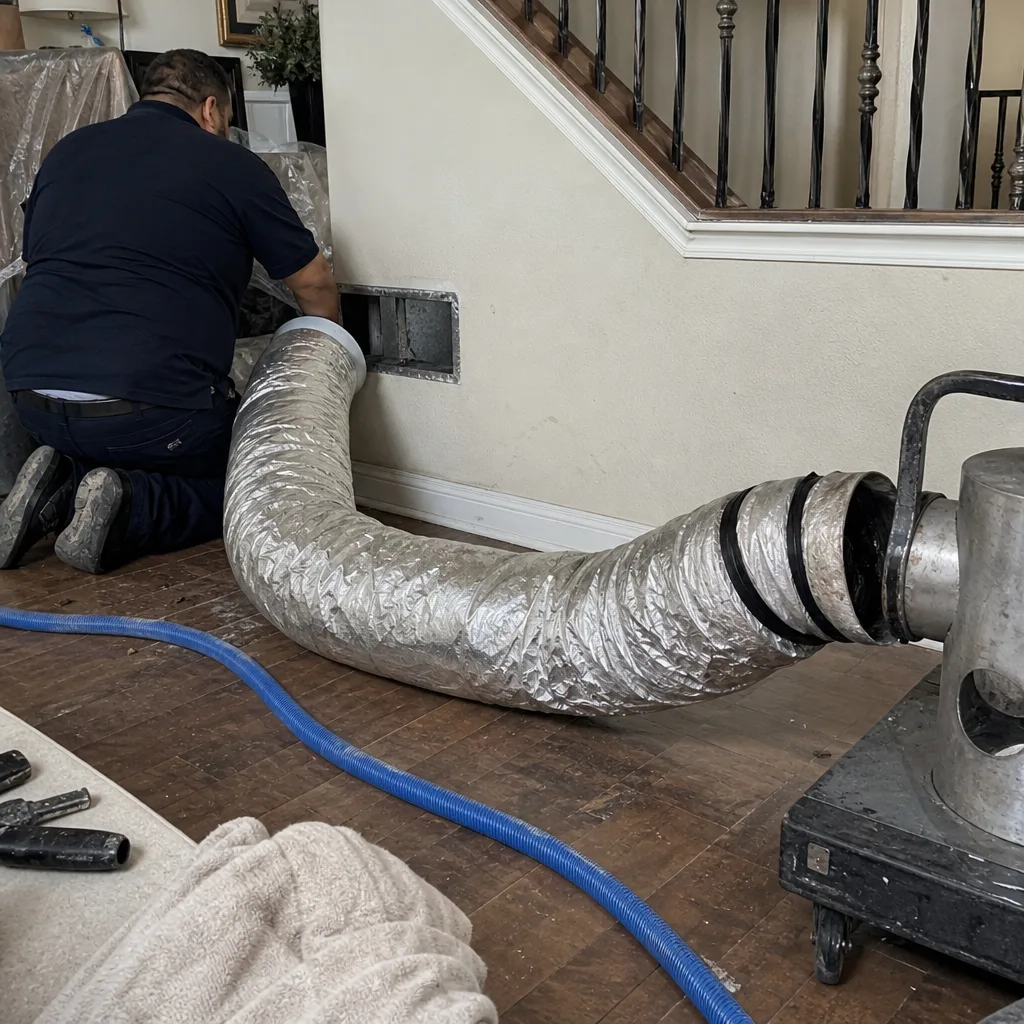 Before
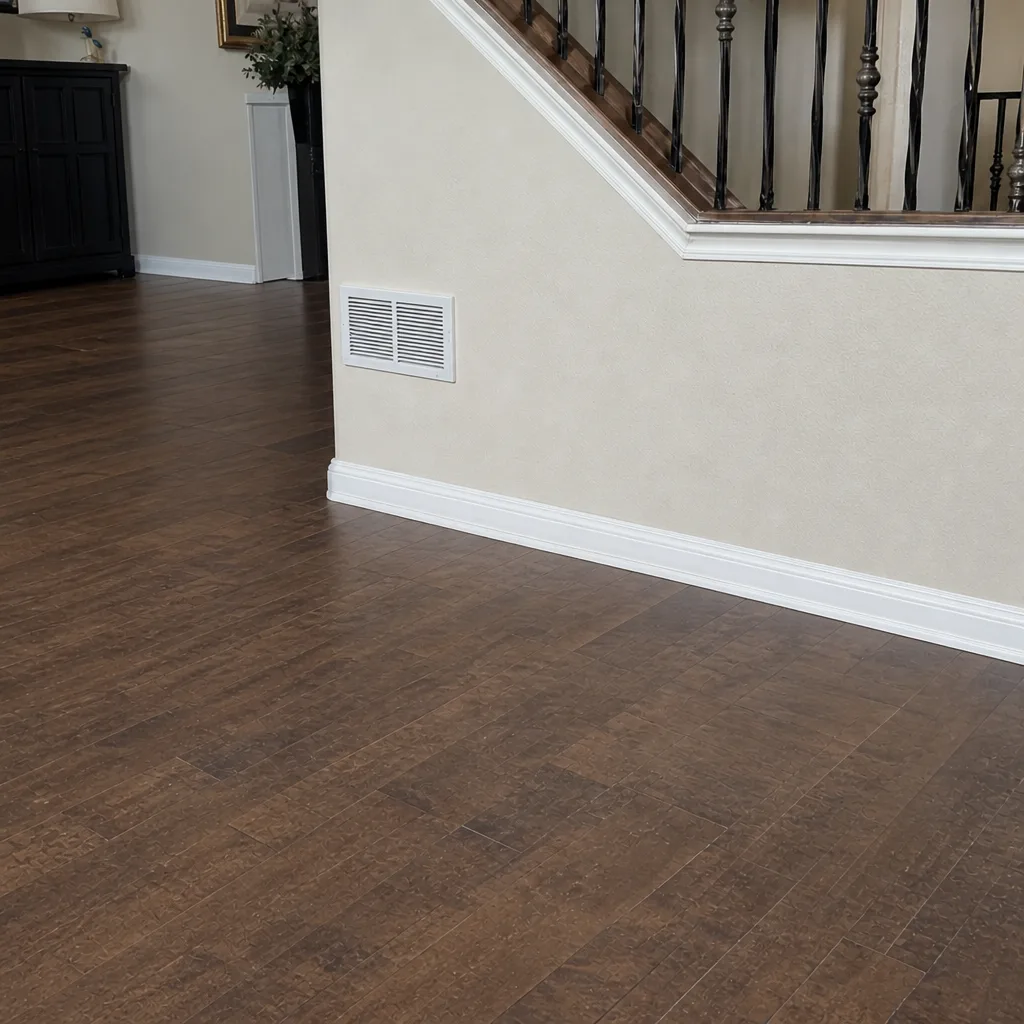 After
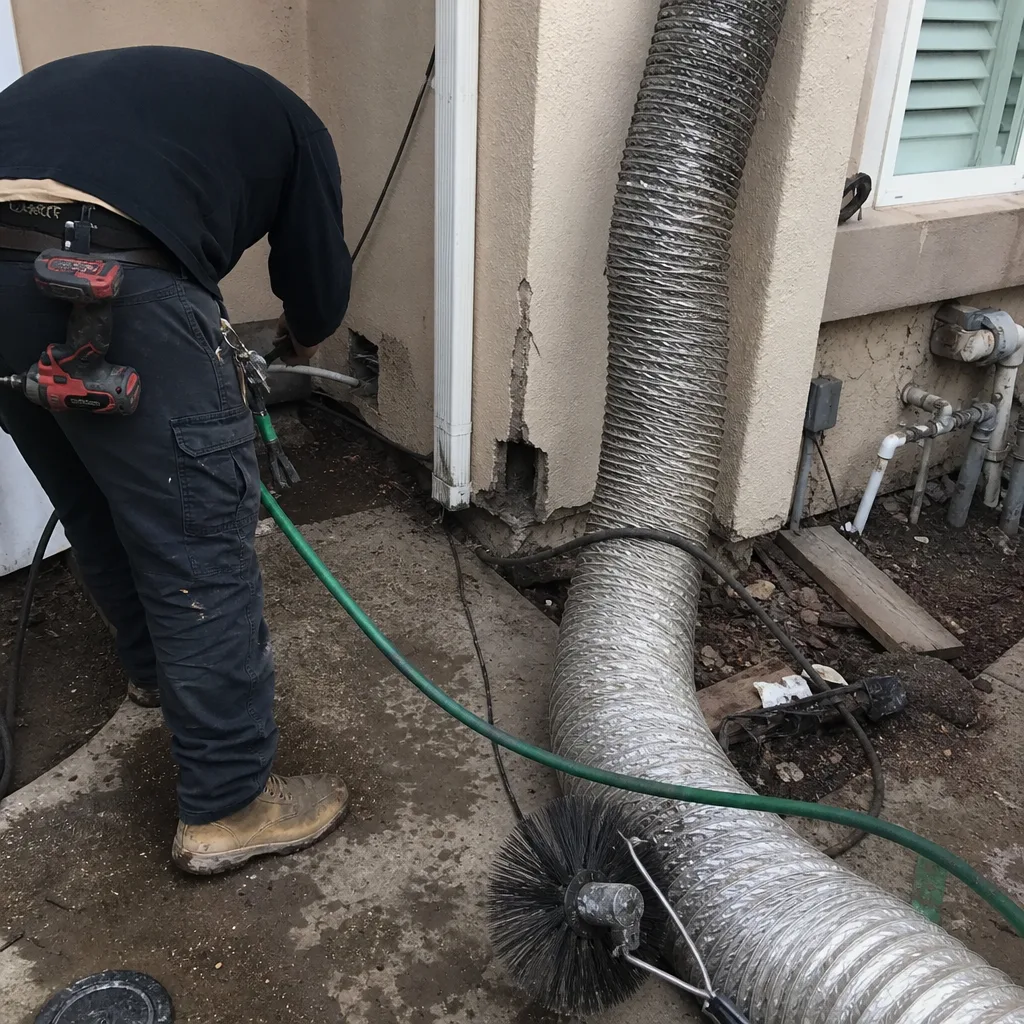 Before
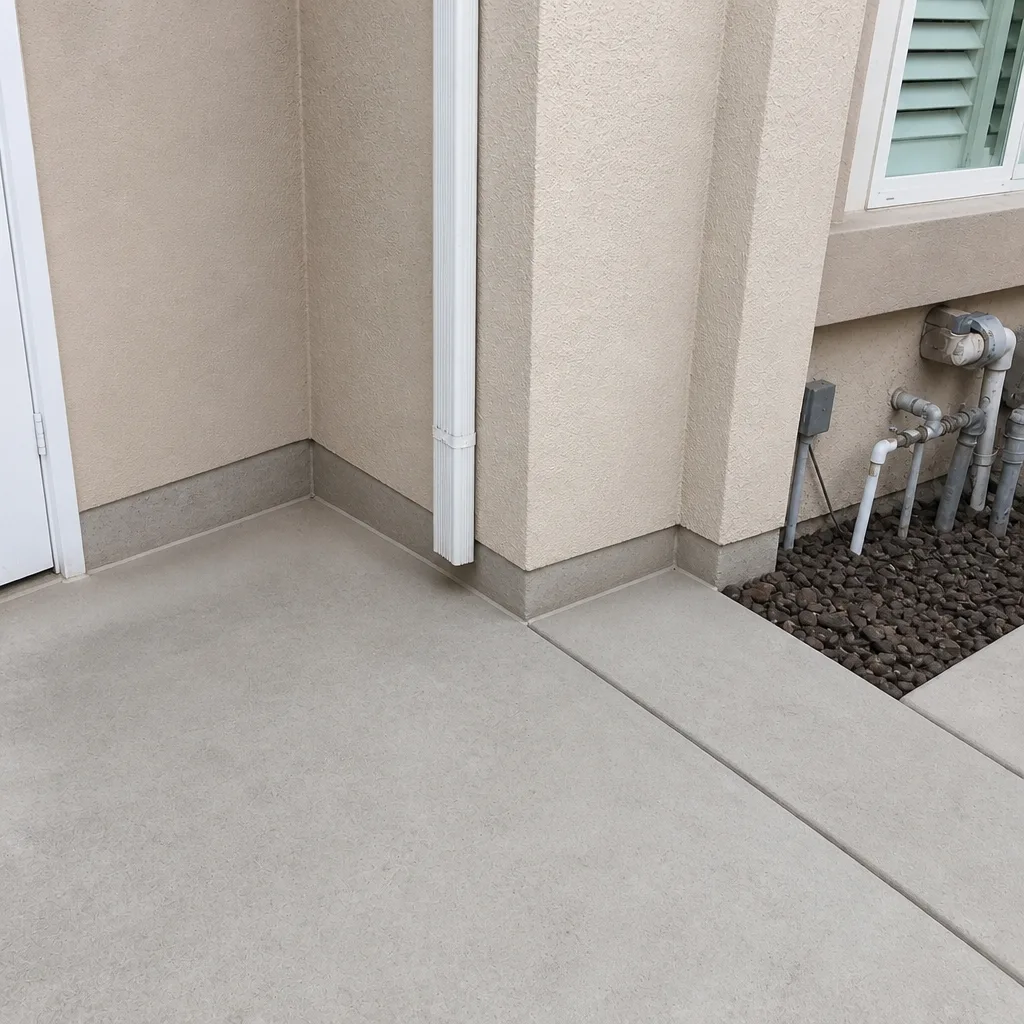 After
 Before
 After
When to Call a Professional
Call a professional if your system ran during a smoke event and the home still smells smoky when the fan runs, if you see visible char or grey film on registers and grilles, or if anyone in the home has asthma or allergies and the system has been through a smoke season. Call if you’ve had a filter in place and the ducts still carry odor, if you don’t know whether the system was running during the event and you want a definitive answer, or if a prior cleaning didn’t hold. Aliso Viejo Air Duct Cleaning Pros offers free estimates in Aliso Viejo. Call (877) 820-9657. We answer 24/7. Fast dispatch from 7am to 7pm, Sunday through Friday. Our technicians have up to 15 years of experience on residential air systems, and the local pro we connect you with is licensed and insured as their state requires.
Frequently Asked Questions
Air duct cleaning in Aliso Viejo typically runs in the range of a few hundred to just over a thousand dollars for a whole-home system, depending on the number of registers, the length of the trunk lines, whether the air handler needs to be cleaned, and whether post-smoke remediation work is required. That’s the full-system price, not a per-vent price, and it’s set by a written estimate before any work starts. Call (877) 820-9657 for an exact quote. Estimates are free.
The cheapest quotes usually leave out the air handler, the return side, or HEPA containment, or they price per vent and then add line items once the technician is on site. A real whole-system cleaning uses professional-grade equipment with HEPA filtration and includes the air handler inside the scope. Ask for a flat price per system in writing, and ask what’s included. If the quote doesn’t name the equipment, ask. Call (877) 820-9657 for an exact quote. Estimates are free.
Ask for before-and-after photographs of your own ducts taken during the job. Anybody can say the ducts were cleaned. Photographs of the actual system before and after are the verifiable record. Ask for a written scope that names the air handler, the filter, the returns, and the supplies. Call (877) 820-9657 for an exact quote. Estimates are free.
For most Aliso Viejo homes, a cleaning every few years is reasonable, but wildfire smoke events reset the clock. After a smoke event that ran through the system, the ducts should be inspected and often cleaned regardless of how recently they were serviced. Homes with pets, allergy sufferers, or recent remodeling usually need more frequent cleaning. Call (877) 820-9657 for an exact quote. Estimates are free.
Wait 2 to 4 weeks after the smoke clears before scheduling a full cleaning. Fine particulate keeps settling for a few weeks, so a cleaning in that window removes more in a single visit than a rushed job done while the air is still dirty. During the wait, keep the system off or in recirculation, and replace the filter. If odor persists months later, schedule remediation sooner than the standard window.
It does. Aliso Viejo sits in a designated wildfire risk corridor, which means smoke events are likely to recur. The planning move is to treat duct cleaning and duct sealing as recurring maintenance tied to the fire season, not a one-time project. Sealing leaks, upgrading filtration with a dedicated filter cabinet, and knowing your thermostat’s recirculation setting are the three highest-impact steps you can take. Call (877) 820-9657 to talk through what your system needs. We answer 24/7.
The Bottom Line
Aliso Viejo homes in a wildfire corridor need three things for smoke preparedness: a pre-event protocol (shut off or recirculate, close windows, fresh filter), a post-event triage (inspection, sampling, odor testing, air handler scope), and a cleaning decision made on the right timeline (2 to 4 weeks after outdoor air clears, or sooner if contamination is verified). The duct system that ran during the event is the system that needs remediation after it. Professional-grade equipment, a flat price per system agreed before work starts, and photographic proof of the work are what make the result verifiable. Your entire air system, one team: that’s the model that works here. Explore more about Aliso Viejo Air Duct Cleaning Pros and how we handle smoke remediation, filtration upgrades, and duct repair. Call (877) 820-9657 for a free estimate. We answer 24/7. Fast dispatch from 7am to 7pm, Sunday through Friday.
Written by the team at Aliso Viejo Air Duct Cleaning Pros.