
Last updated November 23, 2026
 Whole-home duct cleaning
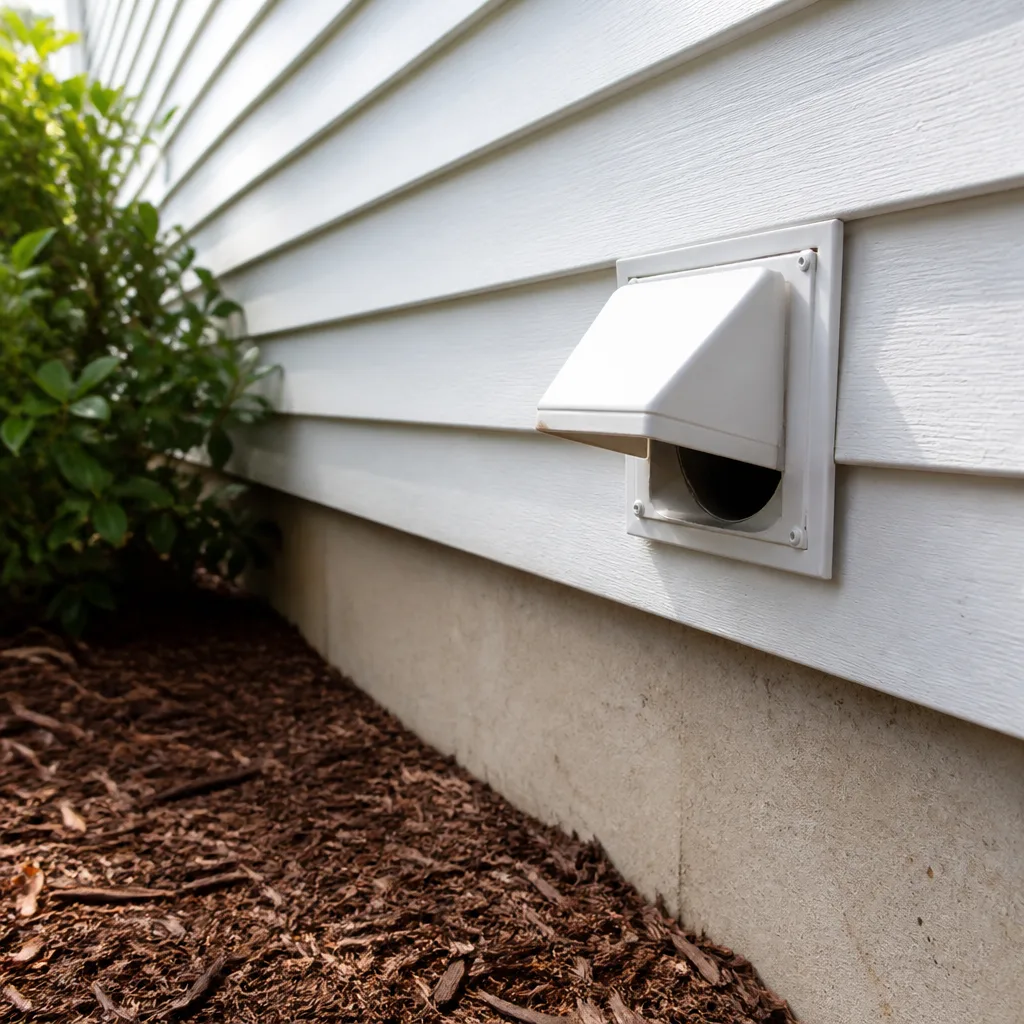 Dryer vent cleaning
 Camera inspection
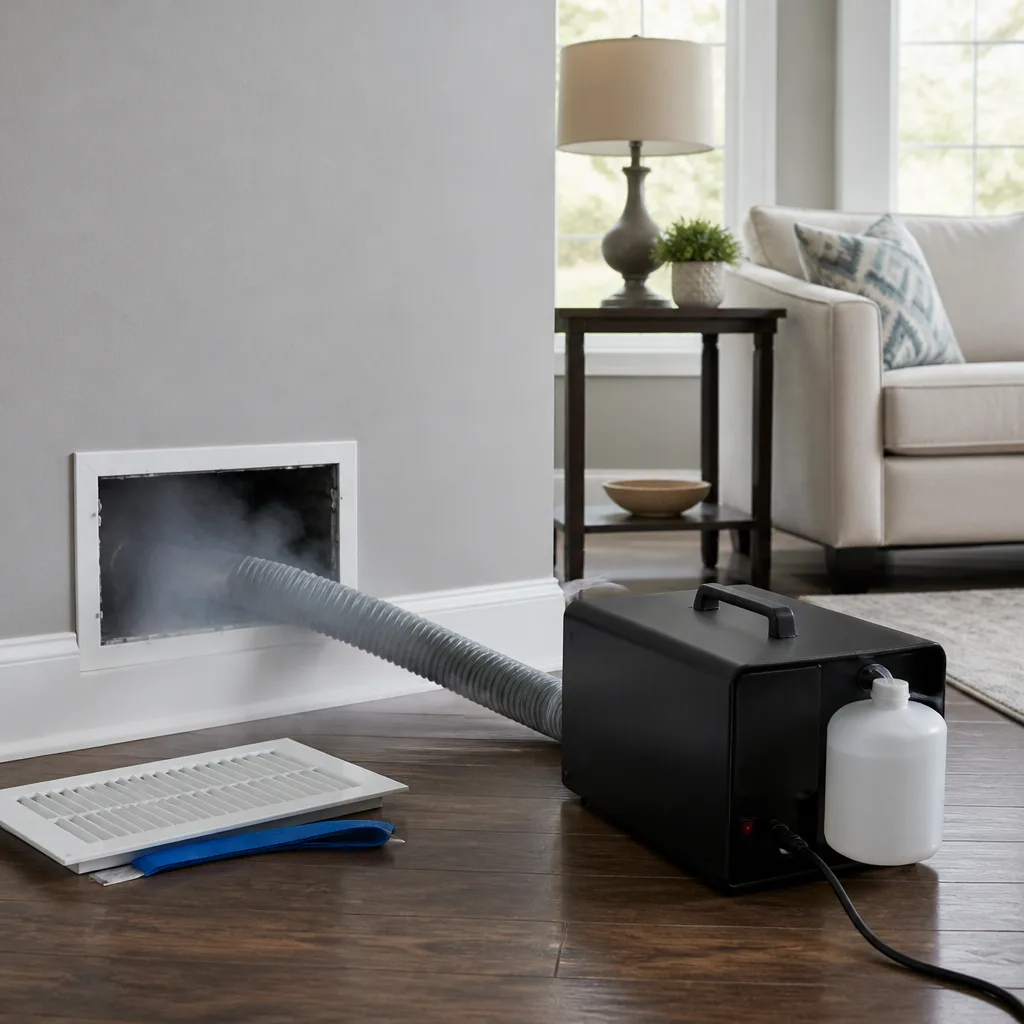 Sanitizing & deodorizing
Whole-system duct and dryer vent check with before-and-after photos - you see exactly what came out of your vents
That "$99 whole-house special" is a bait ad - the real number appears once they are in your hallway, or the "clean" is a shop-vac at the register. We photograph the inside of your ducts before and after instead.
Air Duct Cleaning Warning Signs: An Aliso Viejo Homeowner’s Reference Guide
Most homeowners call us when something smells. That’s the problem. By the time a musty, dusty odor drifts out of a register, the contamination inside the duct system has usually been building for a year and a half to two years, and the fix is more involved, and often more expensive, than it would have been if the first subtle sign had been caught early. The signs that matter most are quiet ones: a bedroom that never quite matches the thermostat, a filter that loads up faster than it used to, a faint hiss at a supply boot. This guide walks backward from the obvious late-stage symptoms to the earlier indicators that give you real lead time. You’ll learn how to read your own system in Aliso Viejo, what each warning sign actually points to, and where cleaning ends and repair begins.
Quick Answer
The earliest warning signs of a duct system that needs attention are uneven room temperatures, filters that clog faster than usual, a slight rise in energy bills without a rate change, and faint airflow noise at registers. Musty odors and visible dust plumes are late-stage signals, which means the system has likely been contaminated for 18 to 24 months by the time you notice them. Catching the quiet signs early is what separates a routine duct cleaning from a duct repair and sealing job.
Styles & brands we work with
- Whole-home duct cleaning
- Dryer vent cleaning
- Camera inspection
- Sanitizing & deodorizing
Table of Contents
- The Early Warning Signs Most Homeowners Miss
- Reading the Odor: Mold, Dust, or VOC Off-Gassing
- A Homeowner’s Visual Inspection Protocol
- Warning Signs That Mean Duct Damage, Not Just Dirt
- Warning Signs Specific to Aliso Viejo Housing Stock
- Why Equipment Choice Changes What Gets Found
- How Often Ducts Actually Need Attention
- Common Mistakes to Avoid
The Early Warning Signs Most Homeowners Miss
The signs that show up first are almost never the ones homeowners associate with dirty ducts. They’re subtle, easy to explain away, and each one has a specific mechanical cause inside the duct system. Knowing the cause is what lets you act early instead of waiting for the smell.
Uneven room temperatures
If the upstairs hall or a west-facing bedroom runs a few degrees warmer than the rest of the house, the instinct is to blame the thermostat or the sun. Often it’s duct leakage. A disconnected joint or a run of flex duct with a crushed section loses conditioned air before it ever reaches the register. Those rooms get less air than the system is paying to produce. In Aliso Viejo, where afternoon heat loads on the inland side of the valley push second-story rooms hard, this sign shows up first upstairs.
Filters loading faster than usual
If you used to change the filter every three months and now it’s gray and matted at six weeks, the filter isn’t the problem. It’s telling you there’s more particulate in the airstream. That can come from a return duct with a breach pulling attic or garage air into the system, or from settled debris inside the ducts themselves getting picked back up. Either way, the filter is doing extra work because the system is feeding it extra load.
A slight rise in utility bills
Duct leakage doesn’t announce itself on a bill, but it does show up as a slow drift. If your usage is climbing without a rate change, a new appliance, or a change in household habits, put duct integrity on the list of things to check. A sealed system moves the air it’s supposed to move. A leaky one keeps running longer to compensate.
Faint airflow noise at supply registers
A whistle or hiss at a supply boot usually means restricted airflow somewhere upstream. Sometimes it’s a closed damper or a crushed flex run. Sometimes it’s a duct interior that’s loaded with debris and effectively narrowed. The noise is the system telling you it’s working harder than it should.
What we’ve learned over years of running professional-grade equipment on duct systems in Aliso Viejo is that these four signs almost always cluster. Homeowners notice one and dismiss it. When you catch two or three together, that’s the point to schedule an assessment.
Reading the Odor: Mold, Dust, or VOC Off-Gassing
Not all duct odors are the same, and treating them all with the same cleaning protocol is a common mistake. Three distinct odors point to three distinct root causes, and each demands a different response. Getting the diagnosis right is the difference between a cleaning and a cleaning that also resolves the problem.
The dusty, chalky odor
This is the most common one. It smells like a hot attic or an old vacuum bag. It usually means accumulated dust and debris inside the ducts, often combined with a filter that’s overdue. The fix is straightforward duct cleaning with the right equipment. Nothing exotic. Rotobrush and Nikro systems are built for exactly this: mechanical agitation of the duct interior plus high-powered negative-pressure extraction so the debris leaves the system rather than settling back in.
The musty, damp, wet-cardboard odor
Mold odor is unmistakable once you’ve smelled it. It’s damp and organic, and it usually gets stronger when the system first kicks on. In Aliso Viejo, this is less about outdoor humidity than about localized moisture: a condensate pan that isn’t draining properly, an air handler cabinet with condensation issues, or duct runs through unconditioned attic space that see summer temperature swings. Cleaning alone does not fix a mold problem if the moisture source remains. That’s why our approach includes Abatement Technologies sanitizing protocols for active biological contamination, and why we look for and address the moisture source before we treat the ductwork.
The sharp, chemical, plasticky odor
This is VOC off-gassing, and it’s the one homeowners most often misread. It smells chemically, sometimes like new carpet or fresh paint. It can come from building materials, furniture, and household products that release volatile organic compounds, and those compounds can accumulate in a poorly ventilated home. It can also come from certain duct materials or sealants that have degraded. A duct cleaning won’t remove the source of a whole-home VOC problem, but evaluating the system and recommending filtration through lines like Aprilaire and Honeywell is part of a complete air-quality assessment.
The three odors side by side
- Dusty / chalky: debris buildup in ducts, driven by filtration and airflow. Cleaning resolves it.
- Musty / damp: active moisture and biological growth. Needs source correction plus sanitizing.
- Chemical / plasticky: VOC off-gassing from materials. Needs source identification plus filtration strategy.
When in doubt, the correct next step is a professional inspection rather than a guess. A technician looking at the air handler and duct interior can tell you in one visit which of the three you have.
A Homeowner’s Visual Inspection Protocol
You can do a meaningful visual check of your own duct system in about fifteen minutes, and it doesn’t require tools beyond a flashlight and a screwdriver. The goal isn’t to fix anything. It’s to catch early signs you can describe accurately when you call a professional. Here’s the protocol we walk homeowners through.
- Start at the supply registers. Remove a register cover (most are held by two screws). Shine the flashlight into the boot and the first few inches of duct. Look for dust accumulation on the duct walls, visible debris at the bottom of the boot, or dark staining that suggests moisture.
- Check the return air grille. The return is doing the most work. Look at the filter slot and the inside of the return chase. If the filter is bypassing air around its edges rather than filtering through the media, that dust is going straight into the system.
- Open the air handler cabinet. With the unit off, look at the blower compartment. A light dusting is normal. A visible coating on the blower wheel or a debris line at the base of the cabinet tells you the system is moving more particulate than it should.
- Go to the attic and look at flex duct runs. Look for runs that are crushed, kinked, or sagging between hangers. Look at every connection point where a flex run meets a rigid trunk or a boot. A connection that’s pulled loose, even slightly, is a direct leak.
- Look for tell-tale moisture. Check the condensate pan and the area around the air handler. Standing water, rust staining, or white mineral deposits are signs of a moisture issue that needs correcting before cleaning.
- Note anything that looks deflated, torn, or disconnected and photograph it. These are the signs that mean repair, not just cleaning, and photos help the assessment go faster.
The attic step matters more than the register step in Aliso Viejo. Attic duct systems here are exposed to significant summer heat, and the flex runs take the thermal stress directly. A quick look at the connections on a summer afternoon will tell you more than a dozen register checks.
If your inspection turns up signs of damage, the next step is air duct cleaning paired with a repair assessment, not cleaning alone.
Warning Signs That Mean Duct Damage, Not Just Dirt
This is the part most homeowners get wrong, and it’s the part that matters most for cost and comfort. A duct system can be perfectly clean and still be leaking a significant volume of air. Cleaning removes debris. It does not reconnect a separated joint, straighten a collapsed flex section, or patch torn duct liner. If any of the following signs are present, the job is duct repair and sealing, not just cleaning.
- Collapsed flex duct sections. Flex duct that has been compressed flat by attic weight, poor support, or thermal sag can’t move air. The sign is a room that gets very little flow compared to its neighbors, and it’s visible if you look at the run.
- Disconnected joints. Where a flex run meets a boot or a trunk, the connection can pull apart. The sign is a direct leak: air escaping into the attic, dust staining around the connection, and a room that never quite heats or cools.
- Torn duct liner. Internal liner that has come loose or torn will eventually collapse into the airstream and block airflow. The sign is restricted flow and sometimes a flapping noise, and it needs to be corrected, not just cleaned.
- Crushed boots and mastic failures. Boots that have been stepped on or crushed during a past installation or remodel, and mastic seals that have dried and cracked over years of heat cycles, both mean leaky ductwork.
- Visible dust trails in the attic. If you can pick up a flashlight and see dust streaks on attic insulation or framing below a duct joint, that joint is leaking air in a way that only repair resolves.
Clean ducts are the start. Sealed, repaired ducts are the finish. This is why our full-service scope includes duct repair and sealing alongside cleaning: a system that leaks doesn’t stay clean for long, and it doesn’t deliver the comfort or efficiency a sealed system does. If you’ve seen any of the bullet points above, ask the technician about repair and sealing during the assessment.
One safety note worth stating plainly. Attics in Aliso Viejo get dangerously hot for large parts of the year, and flex duct systems run through them. A visual check from a safe vantage point is fine. Crawling deep into an attic to inspect or handle ductwork in summer heat is not a job for a homeowner, and neither is reaching into an air handler cabinet with the power connected. Trained technicians do this work for a reason. If you’re unsure whether something you’re seeing is a leak or normal ductwork, leave it and have it assessed.
Warning Signs Specific to Aliso Viejo Housing Stock
Aliso Viejo has a distinctive housing profile, and the duct systems inside it have distinctive failure patterns. A lot of the housing stock was built in the 1990s and 2000s, which means many duct systems are now old enough that the original flex runs, mastic seals, and insulation have been through a couple of decades of thermal cycling. That timeline shows up in specific ways.
First, flex duct in these homes is often run through unconditioned attic space with less support than current best practice calls for. Over years of hot summers and the temperature swings between day and night, sagging between hangers and crushed sections become common. Second, the flex connections at boots and trunk junctions rely on mastic and tape; over 20 years, mastic dries and cracks, and tape loses adhesion. Third, many of these homes have had remodels or additions done since original construction, and duct modifications during a remodel are a frequent source of disconnected joints.
Neighborhood-level context matters here. Homes in and around Aliso Viejo’s established communities from the late 1990s and early 2000s are now squarely in the window where original ductwork deserves a real inspection. Newer homes further out are less likely to have 20-year-old flex, though they can still have installation issues. If you live in Aliso Viejo and your home is in that era, the inspection protocol above is worth doing annually, and it’s worth asking a technician to specifically check duct integrity, not just cleanliness.
Climate plays a role too. Inland afternoon heat in Aliso Viejo puts an especially heavy load on second-story duct runs, and those runs are often the ones with the least attic clearance and the most thermal stress. That pattern is why upstairs temperature imbalances are such a common early warning sign in Aliso Viejo homes. It’s not that the equipment is underperforming. It’s that the duct system is losing air where it’s hardest to see.
If you’ve noticed any of these housing-era patterns in your own home, a professional assessment is the practical next step. Our team can inspect the system and tell you whether you’re looking at cleaning, repair and sealing, or both.
One more Aliso Viejo-specific item: dryer vent performance and duct system integrity are separate systems, but homeowners often confuse the two when they smell something odd. If your clothes are taking longer to dry or the laundry area smells off, that’s the dryer vent cleaning side of the house, not the HVAC ductwork. Both deserve periodic attention, and both are part of the same air-quality picture in a home.
Why Equipment Choice Changes What Gets Found
The warning signs above are only useful if the inspection and the work behind them are done with equipment that can actually reveal and resolve the problem. This is where a lot of the duct cleaning industry falls short, and it’s the reason a cheap cleaning can miss contamination entirely. A shop-vac and a brush don’t have the suction or the reach to pull debris out of a long flex run, and they can’t provide the negative pressure that keeps dust from distributing into the rest of the home.
We use industry-recognized professional equipment on every job. Rotobrush and Nikro systems are the same platforms trusted by certified indoor air quality contractors because they combine mechanical agitation of the duct interior with high-powered negative-pressure extraction in one system. That means the technician can actually see what’s in the ducts, agitate it free, and remove it rather than redistributing it.
For contamination that includes biological growth, the distinction matters even more. Abatement Technologies air-quality protocols are designed for measurable contamination control rather than a surface wipe-down. That’s the difference between sanitizing that’s actually effective and sanitizing that just smells like it was. Where the assessment identifies biological contamination, the sanitizing step needs to be paired with source correction, and that’s what a professional-grade approach delivers.
Beyond cleaning and sanitizing, our familiarity with the Honeywell and Aprilaire product lines means we can recommend and support whole-home filtration and air-quality upgrades that address the underlying issue instead of the symptom. If your warning signs point to filtration or humidity problems, you get a plan for that, not just a cleaning. Our technicians have up to 15 years of experience with these systems and the standards behind them.
The bottom line: if the inspection and cleaning aren’t done with the right equipment, the warning signs you’ve followed here can point you toward a job that won’t actually resolve anything. Ask what equipment will be used before you schedule.
How Often Ducts Actually Need Attention
There’s no single interval that applies to every home, and any service that quotes one without seeing the system is guessing. The honest answer is that duct attention frequency depends on the home, the occupants, and the system itself. Here’s how we think about it for Aliso Viejo homeowners.
- If you have pets, allergies, or asthma in the household: an annual visual inspection and cleaning roughly every two to three years is a reasonable starting point, adjusted based on what the inspection finds.
- If you’ve recently remodeled or done drywall work: clean after construction dust has settled. Remodeling debris is a specific trigger, not a routine one.
- If a home has been vacant or recently purchased: a cleaning and inspection makes sense before you move in. You don’t know what the previous occupants’ air system has seen.
- If you’re seeing any of the early warning signs above: don’t wait for a schedule. Get an assessment now, and let the findings set the interval.
- If your home is from the 1990s or early 2000s in Aliso Viejo: an integrity inspection is worth doing even if nothing seems wrong, because 20-year-old flex duct and mastic are at the age where failures become likely.
The point of this guide is that the right schedule is set by what’s happening in your system, not by the calendar. A home with a sealed, well-maintained duct system and a household without sensitive occupants can go longer. A home with pets, allergies, or 20-year-old ductwork needs more attention, and the earlier you catch it, the less involved the work is.
If you’re weighing whether full HVAC cleaning is part of the picture alongside duct cleaning, that’s a separate assessment: the blower, coils, and cabinet can accumulate contamination that duct cleaning alone doesn’t address. A full-system assessment tells you which parts of the system actually need attention.
Common Mistakes to Avoid
- Waiting for a smell. Odor is a late-stage signal. By the time you smell your ducts, the contamination has likely been building for a year and a half or more, and you’ve been breathing it the whole time. Act on the quiet signs.
- Assuming a cleaning will fix a damage problem. Cleaning removes debris. It does not reconnect a disconnected joint or straighten a collapsed flex run. If the system is leaking air, the leaks have to be sealed, not just cleaned around.
- Choosing on price alone. A quote that’s dramatically lower than the others almost always reflects consumer-grade equipment, a shorter process, or per-vent pricing that balloons on site. Ask what equipment will be used and whether the quote covers the whole system.
- Skipping the attic inspection. The most important findings in an Aliso Viejo home are usually in the attic, where the flex runs and connections are. A cleaning that never looks at the attic can miss the actual problem.
- Treating a mold smell as a cleaning problem. If the odor is musty, the root cause is moisture. Cleaning the ducts without correcting the moisture source allows the problem to return. Sanitizing and source correction go together.
- Ignoring filter behavior. A filter that’s loading faster than it used to is a signal, not a nuisance. It’s telling you there’s more particulate in the system, and it’s worth finding out why.
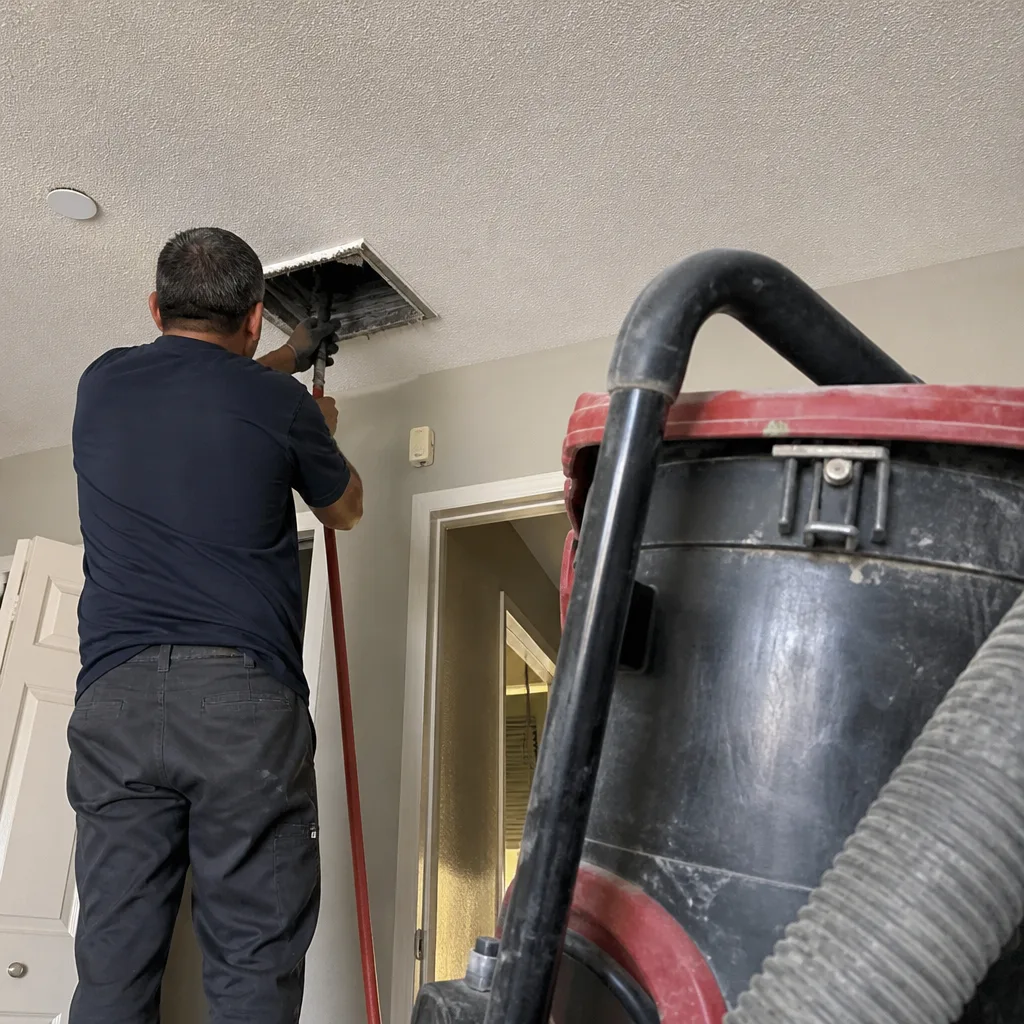
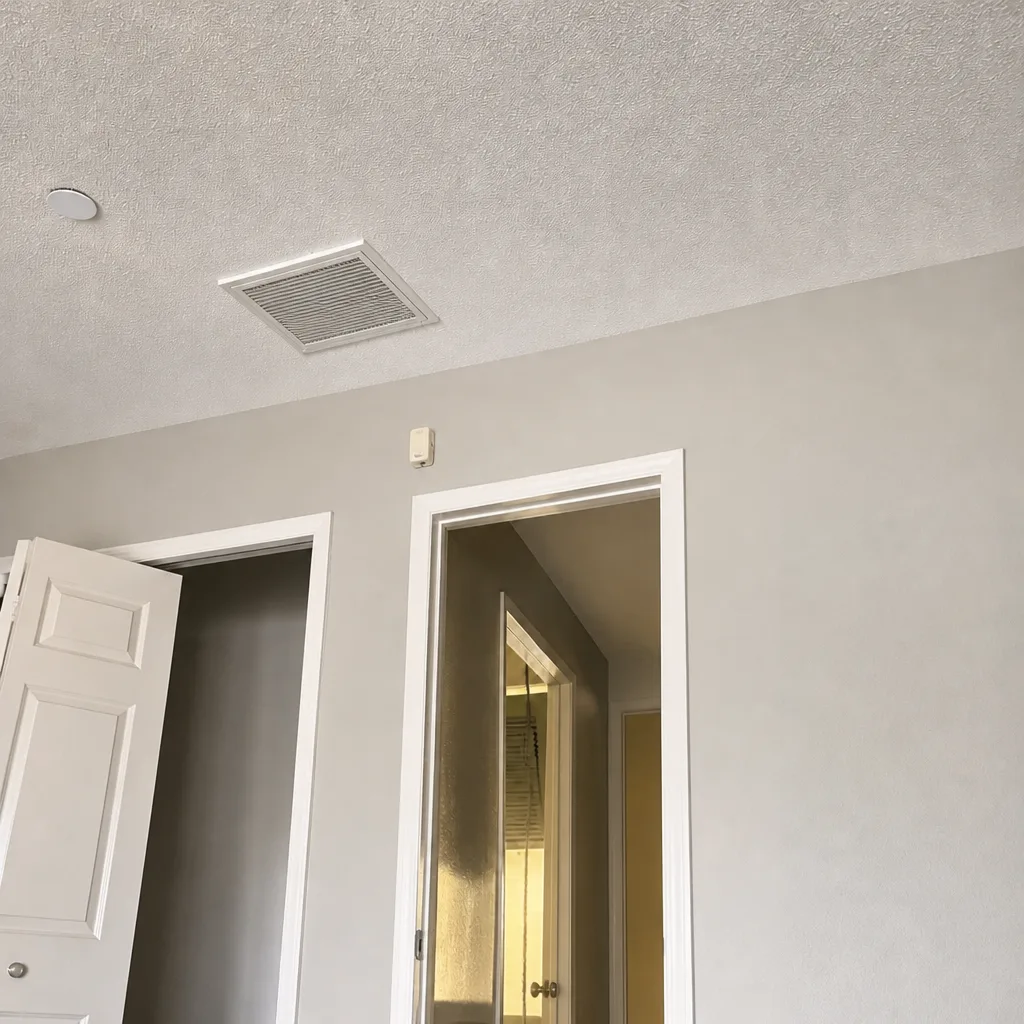
- Not asking for before-and-after photos. Any reputable job can be documented. Photos of your own ducts before and after the work are the simplest way to know the work was actually done.
See the difference
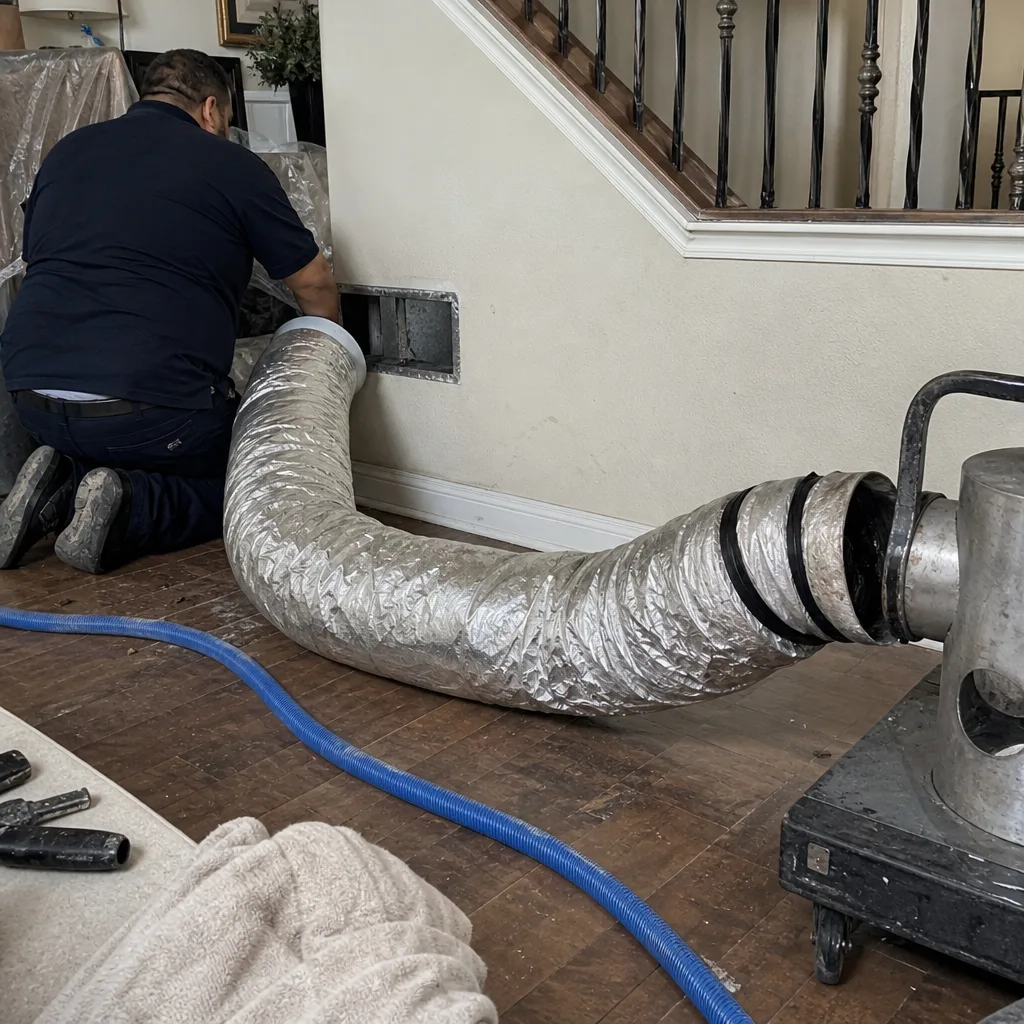 Before
 After
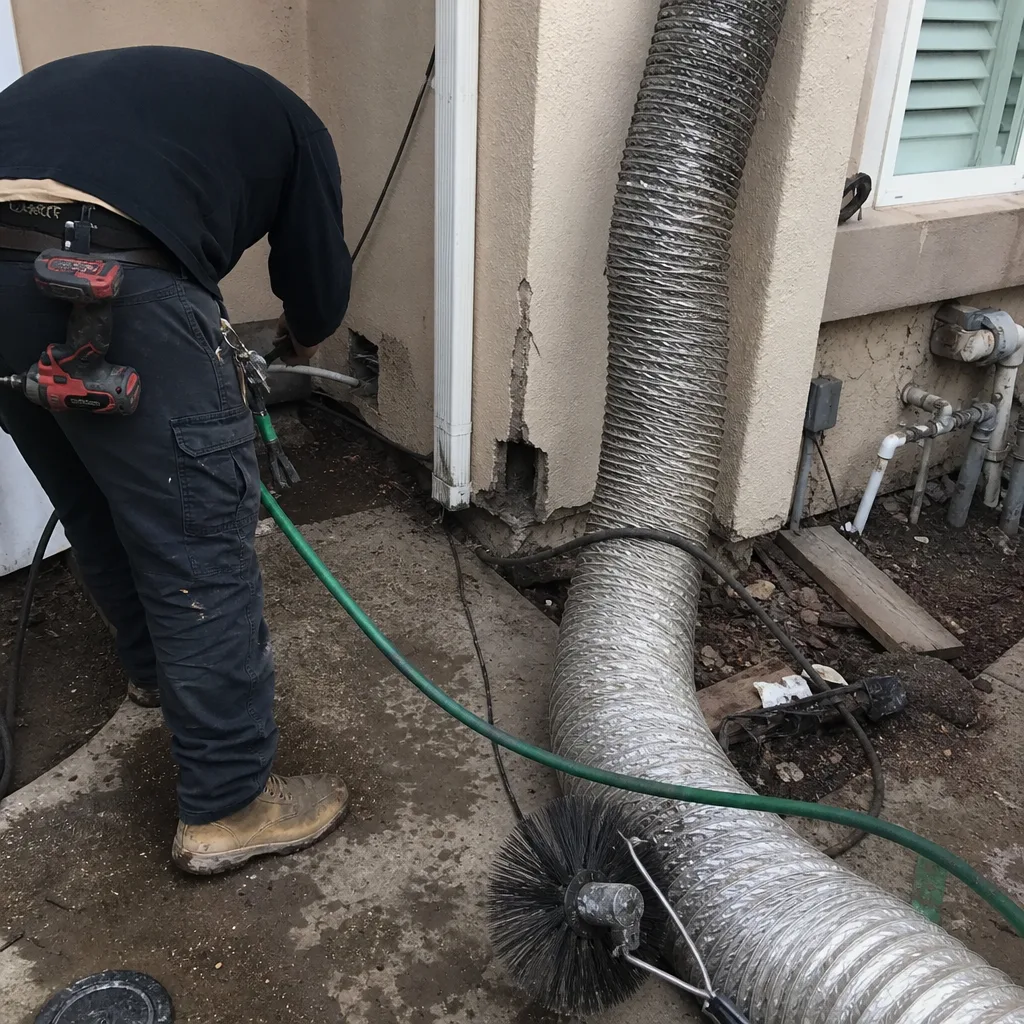 Before
 After
 Before
 After
When to Call a Professional
Call a professional if you’ve found any of the following: visible dust accumulation or debris inside a register boot, a musty odor that returns after you’ve addressed moisture separately, a filter that’s loading faster than it used to, more than one room that runs at a temperature noticeably different from the rest, visible flex duct damage or disconnected joints in the attic, or a home in the era of Aliso Viejo housing stock where original ductwork is now decades old. If you’re not sure whether what you’re seeing is normal or a warning sign, that uncertainty is itself a reason to get an assessment. Aliso Viejo Air Duct Cleaning Pros offers free estimates in Aliso Viejo. Call (877) 820-9657 to schedule an assessment, and ask for the written estimate before any work begins. We answer 24/7. Fast dispatch from 7am to 7pm, Sunday through Friday.
Frequently Asked Questions
The earliest reliable sign is uneven room temperatures, usually a second-story room that runs warmer than the rest of the house. That pattern often points to duct leakage or a restricted run rather than a dirty system, which is why it’s worth an inspection before it worsens. Call (877) 820-9657 for a free estimate.
There’s no single answer because the price depends on the size and configuration of the system and whether repair or sealing is needed, and we set a fixed price per system by written estimate after assessing it, never a per-vent figure. Ask for the written estimate before work starts so the final price is agreed up front. Call (877) 820-9657 for your free estimate.
A dramatically lower quote usually reflects consumer-grade equipment instead of professional systems like Rotobrush or Nikro, a shorter process, or a per-vent price that grows once the technician is on site. The equipment and process are what determine whether the work actually removes the contamination. Call (877) 820-9657 for a fair, fixed estimate.
Ask for before-and-after photos of your own ducts, and ask what equipment will be used before the job begins. A system that’s really cleaned will show the difference in the documentation, and the assessment should tell you whether cleaning, sanitizing, or repair is the right work. Call (877) 820-9657 for a free estimate.
There’s no set interval that fits every home. Households with pets or allergies, homes that have been remodeled, and homes from the 1990s and early 2000s in Aliso Viejo generally warrant a closer schedule, and the right answer comes from an inspection rather than a calendar. Call (877) 820-9657 to book an assessment.
Often, yes. A damp, musty odor usually points to a moisture source, and that needs to be corrected in addition to cleaning and sanitizing the ductwork, because cleaning alone won’t stop it from returning. Sanitizing protocols like Abatement Technologies are designed for exactly this scenario. Call (877) 820-9657 for an assessment.
The Bottom Line
The signs that matter most in your duct system are the ones that don’t announce themselves. Uneven room temperatures, filters loading faster, a quiet rise in energy use, and faint airflow noise are all worth acting on, and each one points to a specific cause inside the ductwork that a professional can identify in a single visit. The obvious signs, like odor and dust plumes, are late-stage, which is exactly why catching the early indicators matters. If you’ve spotted more than one, get an assessment. Aliso Viejo Air Duct Cleaning Pros handles the full range, from duct cleaning and sanitizing to repair and sealing, so one team can find the problem and resolve it. Call (877) 820-9657 for a free estimate, and ask for the written estimate before work begins.
Written by the team at Aliso Viejo Air Duct Cleaning Pros.