
Last updated November 23, 2026
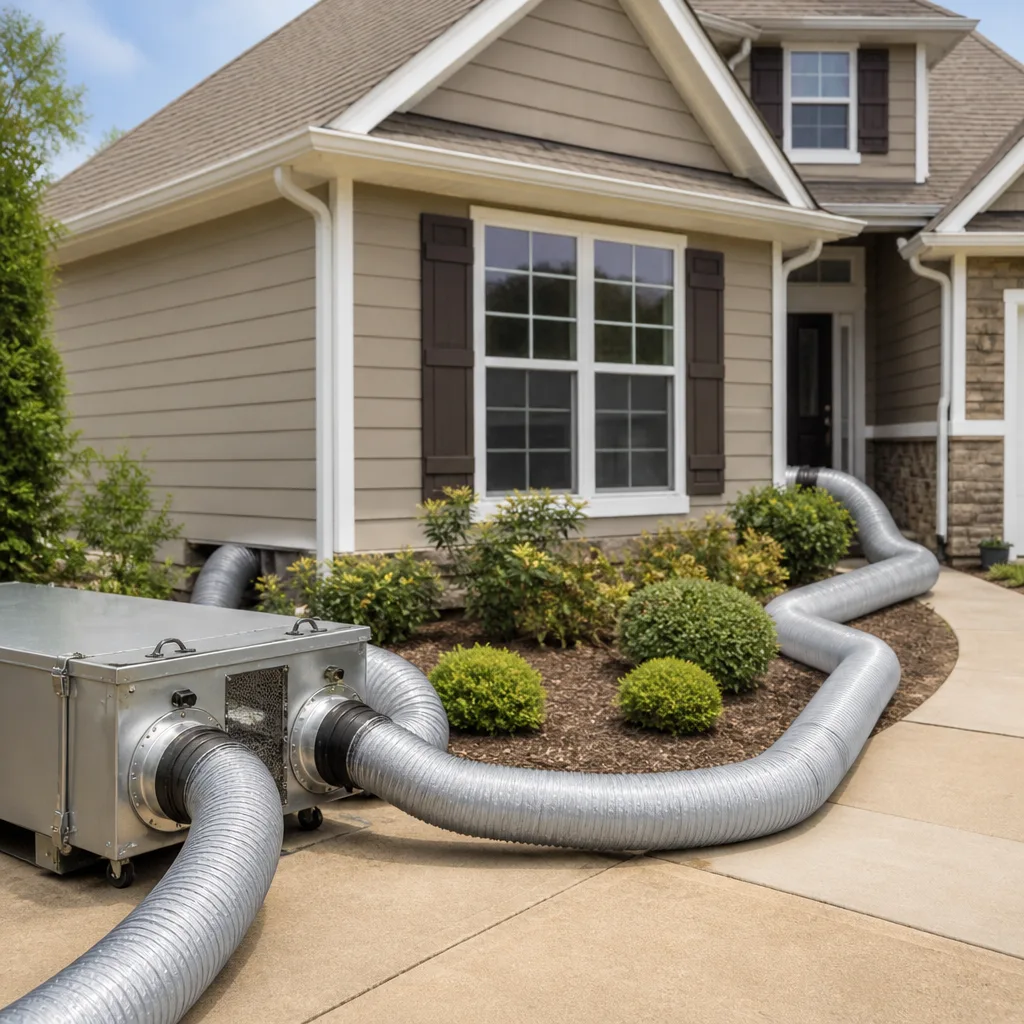 Whole-home duct cleaning
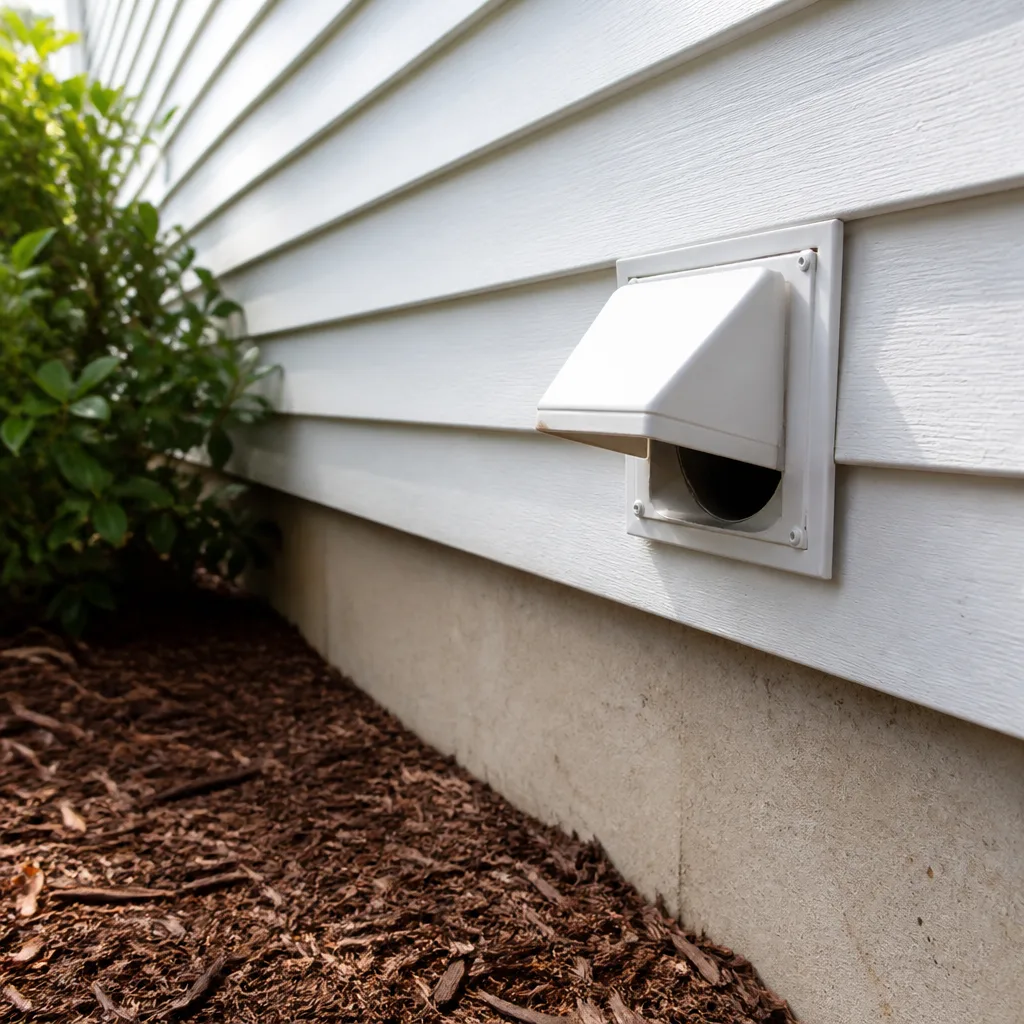 Dryer vent cleaning
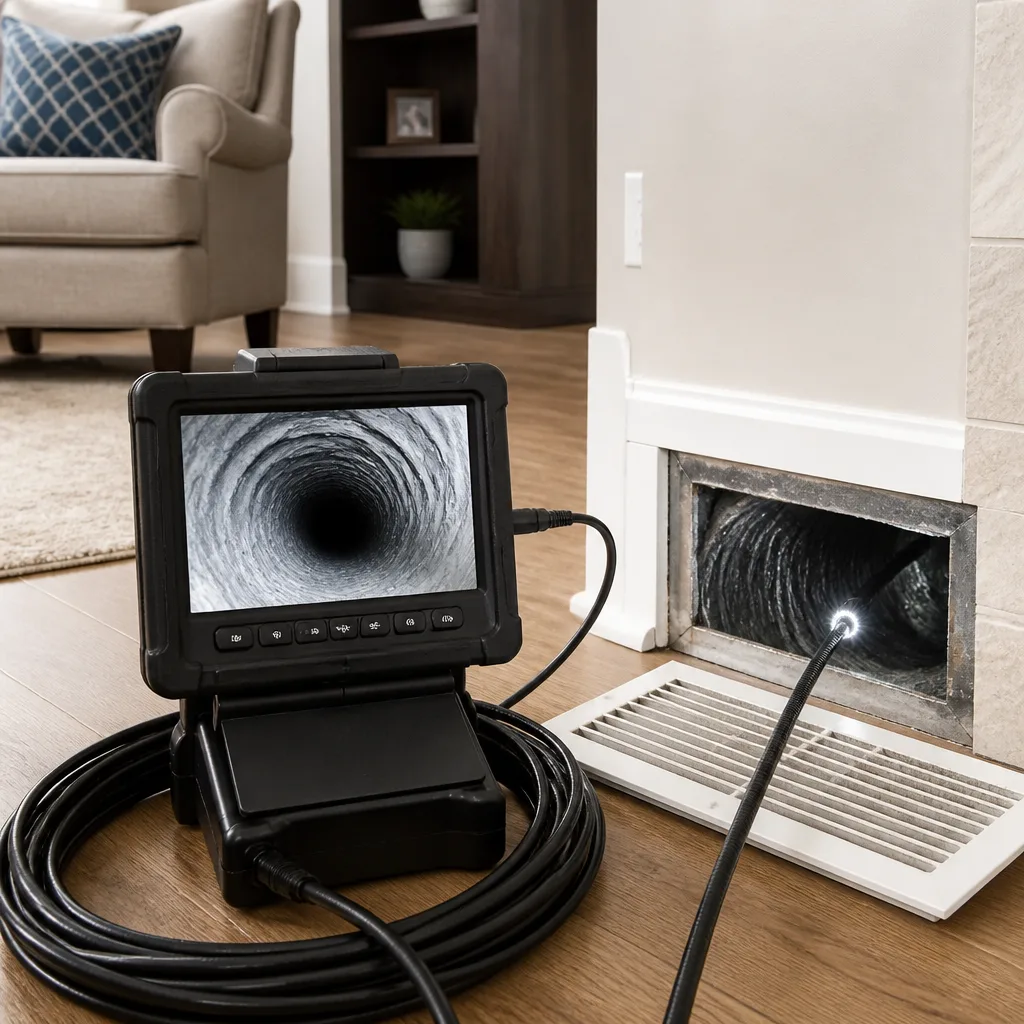 Camera inspection
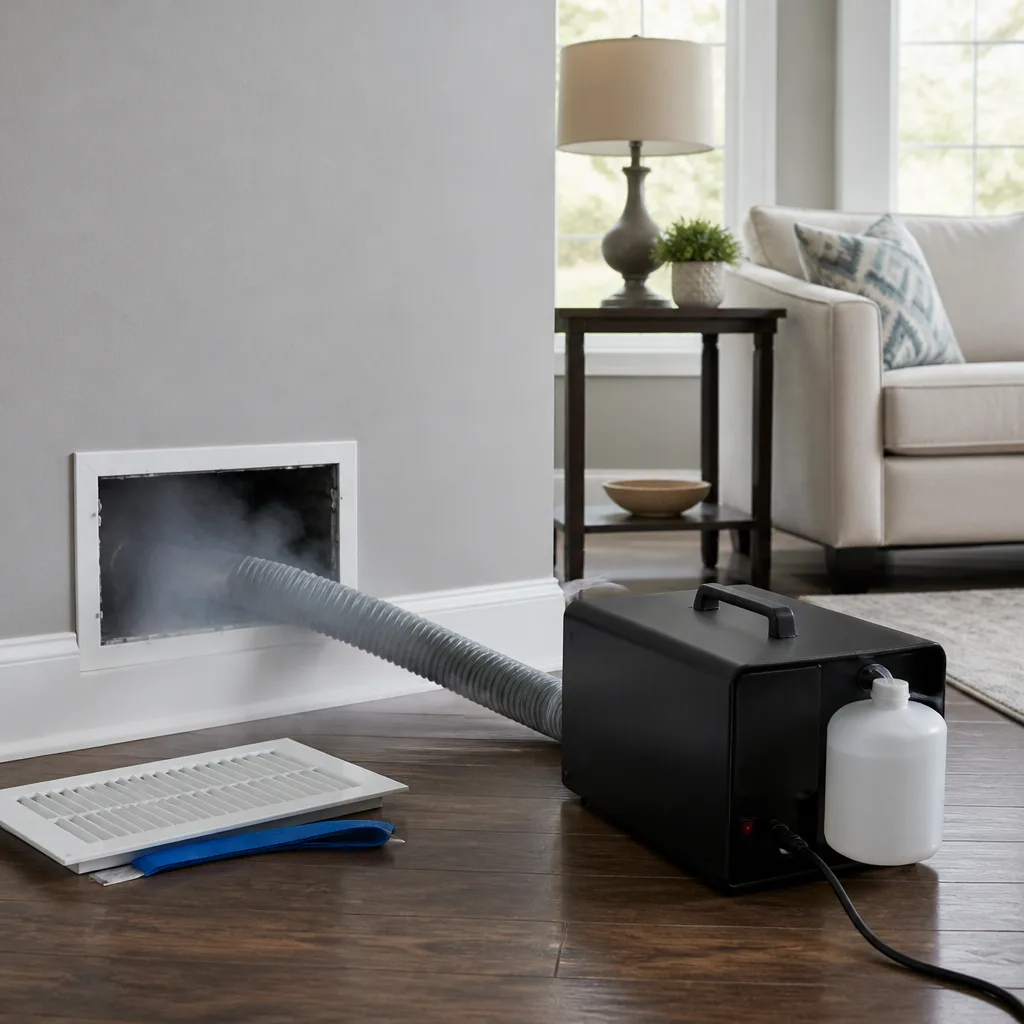 Sanitizing & deodorizing
Whole-system duct and dryer vent check with before-and-after photos - you see exactly what came out of your vents
That "$99 whole-house special" is a bait ad - the real number appears once they are in your hallway, or the "clean" is a shop-vac at the register. We photograph the inside of your ducts before and after instead.
Air Duct Cleaning Permits, Codes & Inspections in Aliso Viejo, CA: What You Need to Know
Duct sealing and repair sounds like a minor service call until you try to sell your home and a buyer’s inspector flags unpermitted HVAC modifications. That scenario plays out more often than any contractor will tell you upfront. Cleaning itself is simple from a regulatory standpoint: no permit, no inspection, no paperwork beyond your invoice. But the moment a technician recommends sealing a leaking trunk line, replacing a damaged section, or rerouting a run to fix airflow, you’ve crossed from maintenance into construction work that can fall under the California Mechanical Code and Title 24 energy rules. In this guide, we walk through where that line sits for Aliso Viejo homeowners, when HERS testing applies, what South Coast AQMD rules mean for chemical sanitizers, and exactly which documents to keep.
Quick Answer
Cleaning the inside of your existing ductwork in Aliso Viejo does not require a permit. Repairing, replacing, or modifying ductwork can require a permit from the City of Aliso Viejo’s building department, and any duct work that alters system performance may trigger California Title 24 energy compliance, including HERS verification for duct sealing in specific cases. The safe rule: ask the contractor to put in writing whether their scope of work is maintenance/cleaning or a mechanical alteration, and ask whether a permit is required before any tools touch the ducts.
Styles & brands we work with
- Whole-home duct cleaning
- Dryer vent cleaning
- Camera inspection
- Sanitizing & deodorizing
Table of Contents
- Cleaning vs. Repair: Where the Permit Line Actually Sits
- What the California Mechanical Code Says About Duct Work
- When California Title 24 Energy Compliance Is Triggered
- HERS Testing and Duct Sealing: When It’s Legally Required
- South Coast AQMD Rules and Duct Sanitizing Agents
- What a Duct Inspection Actually Looks At
- Documents to Keep After Any Duct Service
- What Happens When You Sell an Aliso Viejo Home
Cleaning vs. Repair: Where the Permit Line Actually Sits
Here’s the distinction that matters most, and it’s the one most homeowners hear the least: cleaning is a maintenance activity; modification is construction activity. They’re governed by completely different rules.
Cleaning means using negative-pressure equipment and agitation tools (like a Rotobrush or Nikro system) to remove accumulated debris from inside ducts that already exist in their current configuration. No duct is added, removed, cut, resized, or rerouted. No permit is triggered by cleaning alone because you’re not altering the mechanical system – you’re maintaining it.
Repair or modification covers a much wider territory than most people realize:
- Cutting out and replacing a collapsed or crushed duct section
- Sealing leaks at joints, boots, or the air handler connection with mastic or aerosol sealant
- Adding a new supply or return run
- Rerouting ductwork to improve airflow to a room that never gets comfortable
- Resizing trunk lines or replacing flex duct with rigid duct
- Relocating a register or boot
Any of those can cross into permit territory, depending on scope and how the work affects the system as a whole. The line isn’t perfectly sharp – a small mastic seal at a handful of joints usually isn’t treated the same as replacing twenty feet of trunk line – but the trigger to watch for is whether the contractor is altering the physical duct system or just cleaning it.
In Aliso Viejo, that permit question runs through the City of Aliso Viejo’s building department, which administers the California codes locally. Before any repair scope begins, ask: “Will this work require a permit from the city?” A straight answer up front is a good sign. A vague one isn’t.
If you’re not sure which category you’re in, an air duct cleaning visit with a proper inspection is the place to start. A technician who uses real equipment and actually looks inside will tell you whether you’re looking at maintenance or a repair that needs a paper trail.
What the California Mechanical Code Says About Duct Work
The California Mechanical Code (CMC) is the state’s adopted version of the Uniform Mechanical Code, and it governs how duct systems are built, sealed, supported, and connected. For homeowners, three provisions come up most often when a duct project is discussed.
1. Duct sealing requirements. The CMC and its companion energy provisions require that ducts be sealed at all joints and connections in most configurations. In practice, that means a technician who opens up a duct system to repair it is required to seal it back up properly – not tape it and move on. If your repair scope ends with “we’ll just seal it with foil tape,” that’s a signal the work may not meet code.
2. Support and clearance. Ducts must be supported at proper intervals and kept at required clearances from combustibles and other building elements. This matters most in older Aliso Viejo homes where a previous owner’s duct modification may have left runs sagging or in contact with framing they shouldn’t touch. An inspector will flag unsupported or improperly routed duct runs, and a home sale is often when that flag shows up.
3. Return air and connection to the air handler. The connection between the return plenum, the air handler, and the supply trunk is a common failure point, especially when the system is in the garage or attic. The CMC has requirements about how those connections are made and sealed, and “the previous technician just wedged it back on” doesn’t meet them.
For a typical repair such as replacing a damaged flex run, the requirements may translate to a permit, an inspection, or both, depending on scope. For simple cleaning, none of this applies, and that’s why cleaning is by far the more common service we’re called for in Aliso Viejo. When a repair does come up, the conversation should shift: the estimate should clarify permit responsibility, and the work should be performed in a way that could pass inspection.
We handle HVAC cleaning as part of our service menu, and it’s usually the visit where these issues surface. A dirty coil or a crushed duct run gets noticed during the same inspection that gets the ducts cleaned.
When California Title 24 Energy Compliance Is Triggered
Title 24 is California’s building energy efficiency standard, and it’s the piece of regulation most homeowners have never heard of until it affects them. Here’s the part that matters for duct work: any alteration that affects the thermal performance or air loss characteristics of a duct system can fall inside the Title 24 scope.
In practice, Title 24 comes up most often in three duct scenarios:
- Adding or extending ductwork. A new run, a moved register, or a significant alteration to the layout is treated as a system change and brings Title 24 duct requirements into play.
- Replacing flex duct with rigid duct. This is common in older homes where the original contractor used flex for everything, and it’s actually better for airflow – but it’s an alteration that must comply with the current standard.
- Sealing a significant portion of the duct system. Whole-house duct sealing programs have their own Title 24 treatment, because sealing changes how the system behaves and how much energy it consumes.
Cleaning isn’t a Title 24 trigger. That’s the clean line, and it’s worth repeating. If a contractor tells you cleaning requires Title 24 compliance paperwork, ask them to show you the section of the standard they’re referring to. It’s almost always wrong.
Where Title 24 gets real for Aliso Viejo homeowners is during a larger HVAC project – an air handler replacement, a duct system overhaul, a major reconfiguration. Those projects already require permits, and Title 24 compliance gets documented alongside the permit. If you’re planning duct work as part of a broader HVAC project, ask the contractor to confirm in writing whether Title 24 compliance documentation will be included. It should be, and it’s one of the most valuable pieces of paper you’ll have when you sell.
In our experience, the homeowners who avoid unpermitted work aren’t the ones who know the code by heart. They’re the ones who ask the right question before the work starts: “Is this scope going to require a permit, and will the permit require Title 24 documentation?”
HERS Testing and Duct Sealing: When It’s Legally Required
HERS stands for Home Energy Rating System. It’s a third-party verification program administered by California’s HERS providers, and it exists to make sure that work which claims to improve energy performance actually does.
For duct work, HERS verification comes up in specific, well-defined cases:
- Duct sealing in climate zones with Title 24 duct requirements. When duct sealing is part of a permitted project, a HERS rater may be required to perform a duct leakage test to verify that the work accomplished what the permit said it would.
- Whole-house duct replacement. When the entire duct system is replaced, duct leakage testing is typically required, and it’s a test that can only be performed by a HERS-certified rater.
- Certain system alterations that affect duct distribution or efficiency.
The practical takeaway for an Aliso Viejo homeowner: if a permitted duct project is being done, understand whether a HERS test is part of the scope. It’s not a bonus. It’s a required verification in the cases above, and the test result becomes part of your home’s documentation. Skipping it – or hiring a contractor who “forgets” to schedule the rater – can leave you with an unclosed permit and a real headache at resale.
A HERS rater is a separate party from the contractor doing the work. That’s by design: the verification has to be independent. So when a duct project includes HERS verification, expect two separate visits, one for the work and one for the test. If a contractor tells you “we handle the HERS part,” ask specifically who is performing the test and whether they’re a certified rater.
For most Aliso Viejo homes, HERS testing never comes up because the work being done is cleaning, not a permitted alteration. It’s when duct work crosses into permitted territory that the testing requirement arrives, and it’s better to know that before the project starts than after.
South Coast AQMD Rules and Duct Sanitizing Agents
The South Coast Air Quality Management District (South Coast AQMD) regulates air quality across Orange County and the surrounding region, and it has rules that affect what can be released into the air by businesses operating here. That’s directly relevant to duct sanitizing, which is one of the services we perform using Abatement Technologies protocols.
Two things homeowners should understand about chemical duct treatments:
1. Not all sanitizers are created equal. Some products marketed for duct sanitizing contain chemicals with VOC profiles or ozone generation that fall under AQMD restrictions when used in commercial or even residential settings. A contractor applying a chemical treatment to your ducts should be able to tell you what the product is, what its active ingredients are, and whether it’s compliant with AQMD rules for the application.
2. Less is usually more. The proper approach is to clean first and only use a sanitizing product when the situation calls for it. Abatement Technologies protocols are built around containment and verification rather than heavy chemical application, and that’s the approach we take. If a contractor wants to fog your entire duct system with a chemical you can’t get information about, that’s a red flag.
Our approach to sanitizing is what we call measured air quality, not just a visual wipe-down. The goal is verified cleanliness, not the smell of a cleaning product lingering in your home for a week.
If sanitizing is on your list, ask two questions before any product is applied: what is the product, and is it compliant with South Coast AQMD rules for residential duct application? A contractor who can’t answer both is not the person to apply it.
What a Duct Inspection Actually Looks At
Whether an inspection is part of a cleaning visit or a permit-related requirement, here’s what gets checked – and what a proper inspection looks like with professional equipment.
- Visual inspection of accessible ductwork. A technician with a camera and a light should look inside trunks, branches, and boots. Not just the register openings from the room side.
- Airflow measurement. Static pressure at the air handler and airflow at each register gives a picture of the system’s performance. Poor airflow in one room is often a duct issue, not a filter issue.
- Seal and connection check. Joints, boots, mastic, and the connection between the duct and the air handler are inspected for gaps and failures. This is where unpermitted prior work most often shows up.
- Insulation condition. Damaged or missing duct insulation matters more than most homeowners realize, because it affects both temperature loss and condensation risk.
- Moisture and contamination. Any evidence of moisture intrusion, mold growth, or pest activity gets documented, because it changes what the cleaning approach should be.
- Filter and air handler condition. The filter is the simplest part and often the most revealing. A filter that’s loading unusually fast is telling you something about the system.
For Aliso Viejo homes, the inspection often surfaces a common local issue: ducts installed in attics with inconsistent insulation, which means the system picks up heat in the afternoon. That’s an insulation and routing issue, not a cleaning problem, and it’s worth knowing the difference before you spend money on a treatment that won’t fix it.
An inspection is not the same as a permit inspection. A permit inspection is performed by the City of Aliso Viejo, and it’s the document that matters for compliance. A technician’s inspection is diagnostic information that tells you what the system needs.
Documents to Keep After Any Duct Service
This is the part most homeowners never think about until they need it. Any duct work beyond a plain cleaning should leave you with a paper trail, and the paper trail is what protects you during a real estate transaction.
Keep the following:
- The written estimate and the invoice. Both should describe the scope of work. “Cleaned ducts” is fine. “Replaced 14 feet of crushed trunk line and sealed all accessible joints” is better, because it tells a future buyer (and their inspector) exactly what was done.
- Before-and-after photos. A reputable contractor takes them. They’re your evidence that the work described on the invoice was actually performed. This is one of the most underused documents in a home sale.
- Permit documentation if any work was permitted. The permit number, the final inspection card, and any signed-off paperwork. If a permit was pulled, it should be closed out with an inspection on record.
- HERS verification paperwork if applicable. The completed HERS verification form is a separate document from the permit. Keep it with the permit paperwork.
- Product information for any sanitizing agent used. What was applied, at what dilution, and where. This matters if a future occupant has chemical sensitivities.
- Warranty or workmanship documentation, if provided. Whatever the contractor offers in writing, keep it. Even if it’s minimal, knowing what was promised is useful.
Store these with your other home documents (title, HOA paperwork, appliance manuals). In Aliso Viejo, where turnover in some neighborhoods has been steady and buyers are increasingly attentive to inspection findings, the seller who can hand over a folder documenting every duct service has a smoother transaction than the seller who can’t.
If you’ve had duct work done and don’t have these documents, ask the contractor for copies. Any legitimate operation keeps records. It’s not an unusual request, and it’s a useful way to find out how well-organized the contractor really is.
We take before-and-after photos on every job we run, and we’re happy to send copies to any homeowner who needs them, especially before a home sale. That’s part of what “clean ducts are the start, sealed and repaired ducts are the finish” means in practice. The finish includes the paperwork.
What Happens When You Sell an Aliso Viejo Home
Here’s where the regulatory questions get real for most homeowners: not during the service, but during a sale. A buyer’s home inspector walks the property, and any HVAC equipment or duct work is on the list of things they check. If there’s evidence of prior work – a new duct run, a repaired trunk line, a sealed plenum – the inspector may ask for documentation.
If you can’t produce it, three things can happen:
- Request for further inspection. The buyer asks for a specialist inspection, which delays the transaction and may complicate negotiations.
- Credit request. The buyer asks for a credit at closing to cover what they assume might be unpermitted or poorly executed work.
- Walk-away. The buyer gets spooked and the deal falls apart.
None of these are disasters, but all of them are avoidable. The fix is simple: before the sale, gather your documentation. If a duct project was done and you don’t have permit paperwork, contact the contractor who did it. If that fails, contact the City of Aliso Viejo to see whether any record exists.
For homeowners who did the work properly – permitted, inspected, documented – the pre-sale conversation is quick. The paperwork answers every question, and the buyer’s inspector moves on to the next item on their list.
For a full rundown of the services that generate the documentation you’ll want on hand, see our Aliso Viejo Air Duct Cleaning Pros page. It’s the starting point for any service conversation in the city.
Common Mistakes to Avoid
- Assuming cleaning and repair are covered by the same rules. They’re not, and the difference is the whole subject of this guide. Ask the contractor to state in writing whether the scope is cleaning or repair before any work begins.
- Letting a contractor skip the permit “because it’s a small job.” Small jobs still require permits when they involve altering the mechanical system. A contractor who offers to skip the permit is telling you something about how they operate.
- Not asking about Title 24 during a duct project. If duct work is done as part of a larger HVAC project, Title 24 compliance is part of the scope. Ask, in writing, before the work starts.
- Skipping the HERS test when it’s required. The test isn’t optional when the code says it’s required. Skipping it leaves an open permit that will surface at resale.
- Hiring a sanitizing service that can’t explain its products. A reputable provider can name the product, describe it, and explain how it complies with South Coast AQMD rules. A provider who won’t is a provider to avoid.
- Not keeping before-and-after photos. These are your best evidence that the work was done. Ask for them if the contractor doesn’t offer them.
- Assuming the buyer’s inspector won’t notice unpermitted work. They will. It’s one of the things they’re trained to spot, and a documentary gap is one of the things that shows up in their report.
See the difference
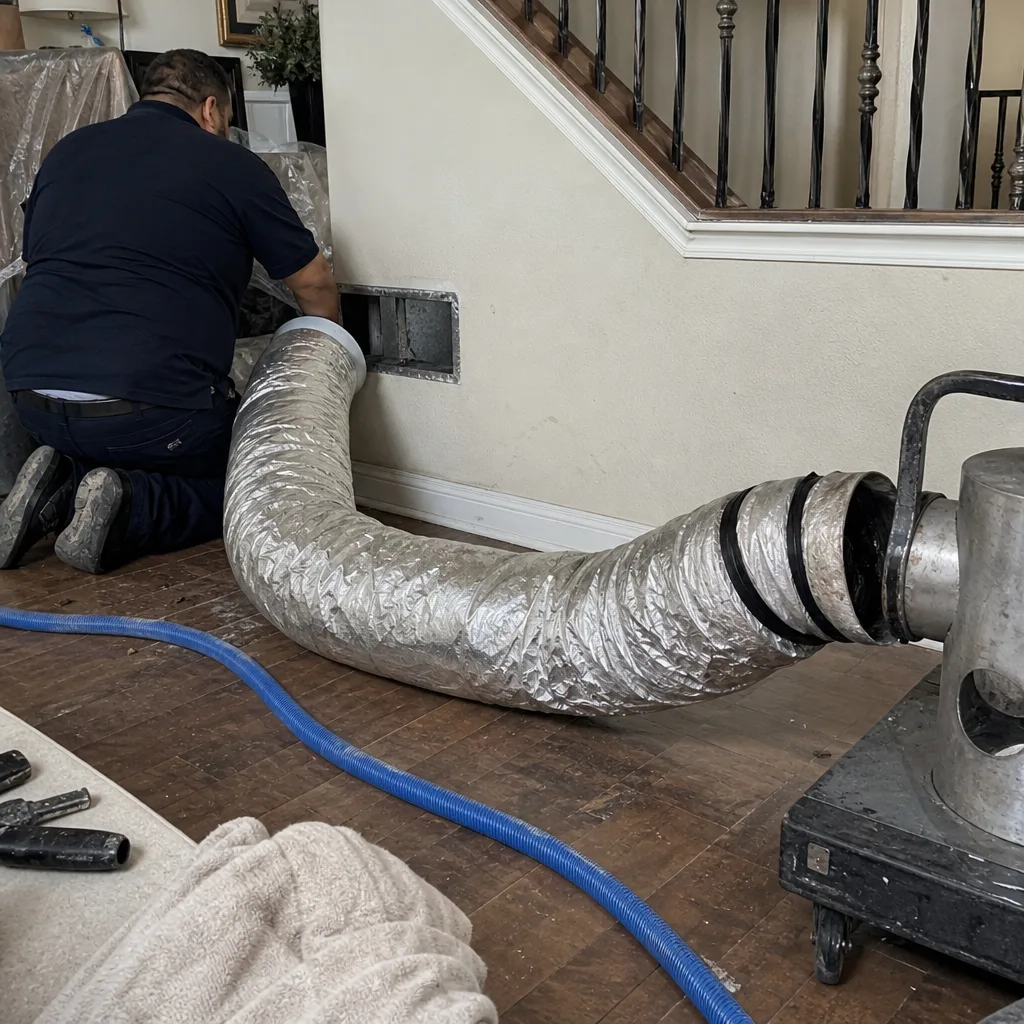 Before
 After
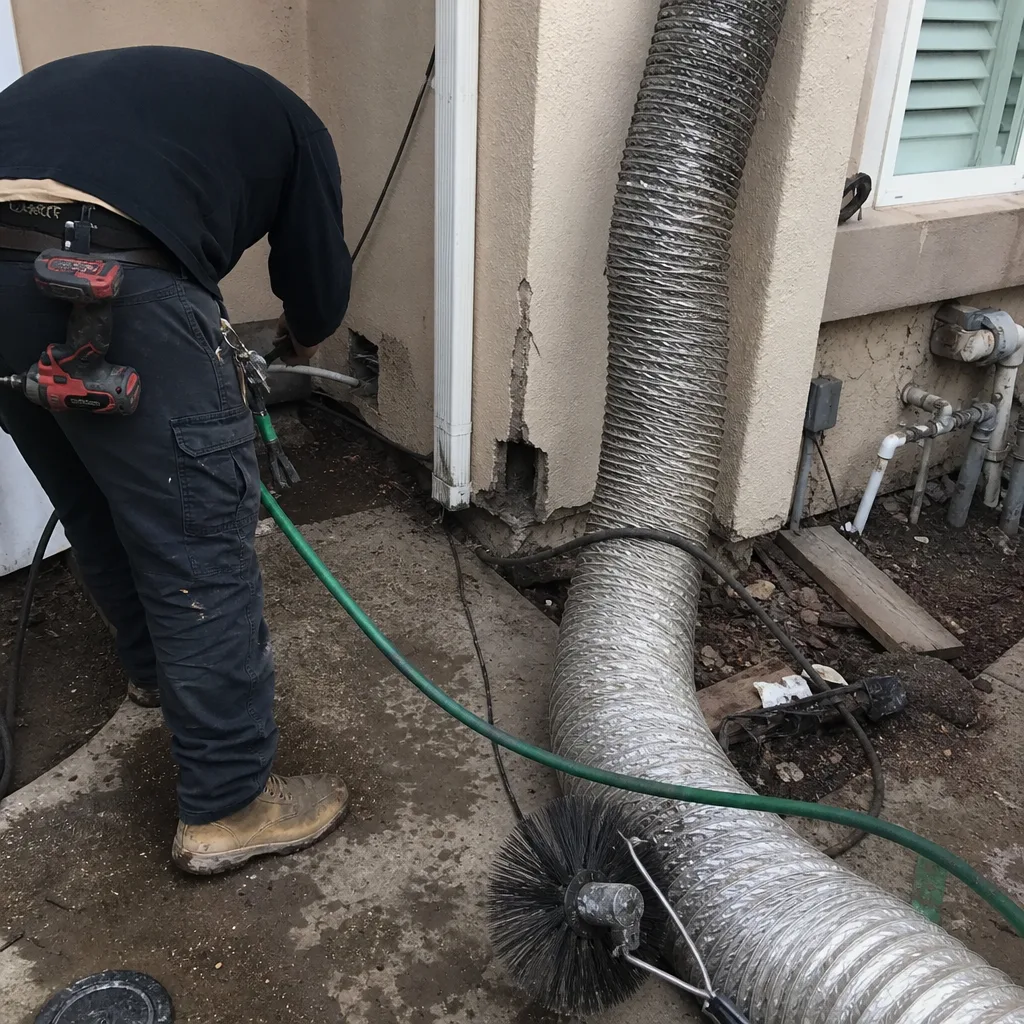 Before
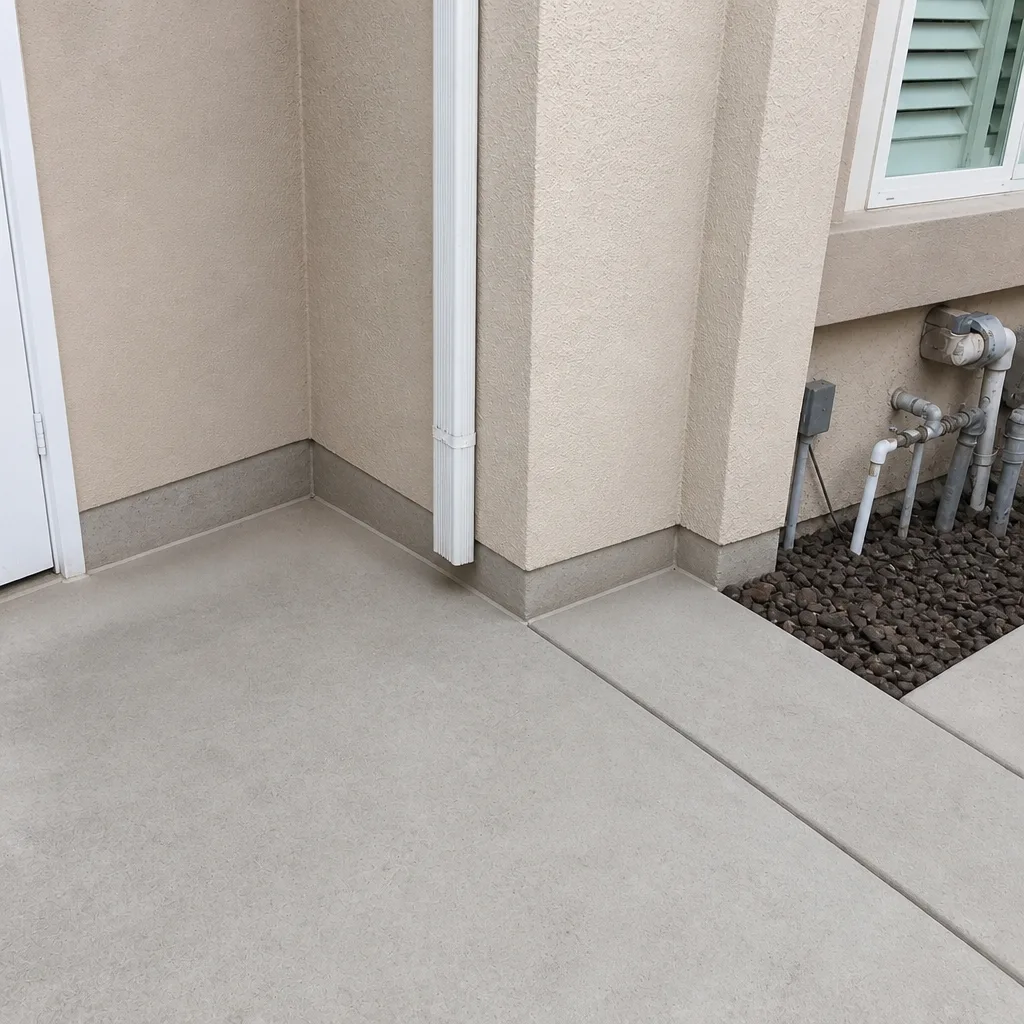 After
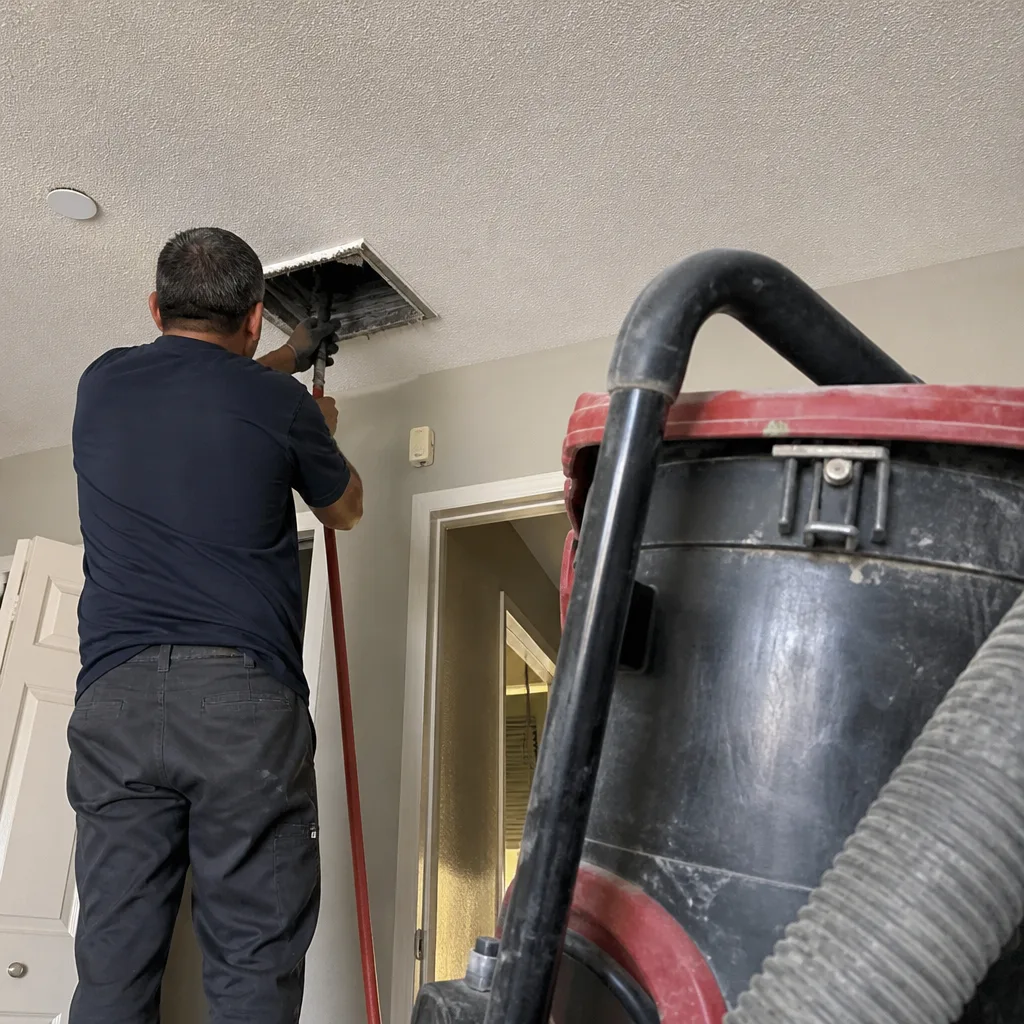 Before
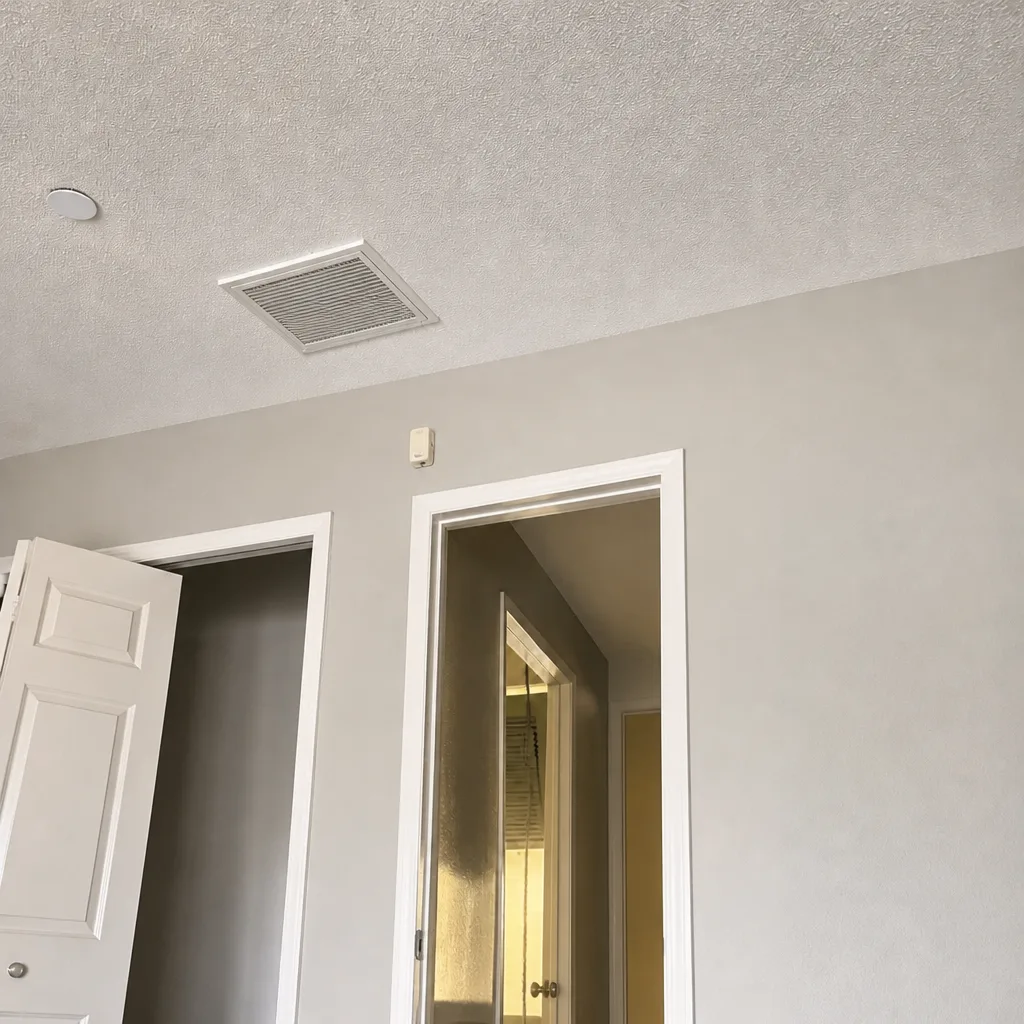 After
When to Call a Professional
Call a professional if you’re seeing any of these: visible debris blowing out of a register when the system runs, a persistent musty smell that returns shortly after cleaning, a room that never gets comfortable compared to the rest of the house, visible sagging or detached duct runs in the attic or garage, or any evidence of pest activity inside the ductwork. Any of those is a signal that the system needs an inspection before a cleaning, because there may be a repair beyond the cleaning. Call a professional before you sign anything described as a “duct replacement” or a “duct modification” without a permit discussion – it’s better to sort that out before the work starts than after. Aliso Viejo Air Duct Cleaning Pros offers free estimates in Aliso Viejo – call (877) 820-9657. We answer 24/7. Fast dispatch from 7am to 7pm, Sunday through Friday.
Frequently Asked Questions
No. Air duct cleaning alone does not require a permit in Aliso Viejo. Cleaning is maintenance of an existing system, not construction work, and there’s no regulatory approval needed for the service itself. The confusion usually comes from contractors mixing “cleaning” with “repair and sealing” in the same quote. Ask the contractor to separate the two on the estimate, and ask specifically whether the repair portion requires a permit. If a contractor tells you cleaning requires a permit, ask them to point to the code section – and call (877) 820-9657 for a straight answer and a free estimate.
It can, depending on scope. Small maintenance-level sealing at a handful of joints typically does not require a permit. Alterations that change the physical duct configuration – adding runs, replacing sections, rerouting, resizing – often do. The California Mechanical Code and Title 24 together govern how the work must be done and how it’s documented. The City of Aliso Viejo’s building department administers the permit question locally, and a contractor should be able to tell you whether your specific scope is permit-required. Call (877) 820-9657 if you want us to walk through your situation – estimates are free.
HERS stands for Home Energy Rating System. It’s California’s third-party verification program, and it requires a HERS-certified rater to test that permitted duct work actually meets the performance standards the permit promised. It’s most commonly required for whole-house duct replacement and certain duct sealing projects, and when it’s required, it isn’t optional. A permit won’t close out without the HERS verification documentation. If your project is permitted and the scope implicates HERS, plan for two visits: the contractor’s work, then the rater’s test. Call (877) 820-9657 for a free estimate and a conversation about whether your project is likely to trigger HERS.
Yes, in certain respects. The South Coast Air Quality Management District (South Coast AQMD) has rules that affect what can be released into the air by service providers operating in Orange County, and some duct sanitizing products fall under those rules. A contractor applying a sanitizing agent should be able to tell you what the product is, what it contains, and whether it’s compliant with AQMD rules for residential application. Abatement Technologies protocols, which we use, are built around containment and verification rather than heavy chemical application. If you’re considering sanitizing and want to know what would be applied in your home, call (877) 820-9657 – estimates are free.
Keep the written estimate, the invoice, before-and-after photos, any permit paperwork, any HERS verification form, any product information for sanitizing agents used, and any warranty or workmanship documentation. This is the folder a future buyer’s inspector will want to see. If the work was permitted and inspected, the permit sign-off is the single most valuable document, because it proves the work was done to code and reviewed by the city. If you’ve had duct work done and don’t have the paperwork, call the contractor for copies before you list the home. Call (877) 820-9657 if you want help sorting out what you should have and what’s missing – estimates are free.
Yes, and it’s more common than buyers expect. During the sale, a buyer’s home inspector will look at the HVAC system and may flag any duct work that looks newer than the rest of the system. If there’s no permit documentation, the buyer typically requests a further inspection, a credit, or both, and sometimes walks away. The fix is preventative: pull the permit when the work is done, keep the documentation, and the sale goes smoothly. If you’re preparing to sell and unsure about prior duct work, call (877) 820-9657 – estimates are free, and we can help you figure out what’s on record.
The Bottom Line
Air duct cleaning in Aliso Viejo doesn’t require a permit, and that part is simple. The complexity starts when a cleaning inspection turns up a duct problem that needs repair, because duct repair and modification can trigger California Mechanical Code permit requirements, Title 24 energy compliance, and HERS verification in the cases we’ve described. The homeowner’s job isn’t to memorize the code. It’s to ask the right questions before the work begins, get the scope in writing, keep the paperwork after, and confirm that any work done to the ducts could pass a city inspection. If you handle those four things, you’ll never be the seller whose duct work gets flagged at closing. Call (877) 820-9657 for a free estimate. We answer 24/7. Fast dispatch from 7am to 7pm, Sunday through Friday. Our technicians have up to 15 years of experience, and we use professional-grade Rotobrush and Nikro equipment on every job. For dryer vent work in the same visit, see dryer vent cleaning.
Written by the team at Aliso Viejo Air Duct Cleaning Pros.